
WPC 865-867 MHZ DELICENSED INDUSTRIAL HARDWARE
Industrial RFID Scanners, Fixed Readers & Rugged Handhelds in India
Buy enterprise UHF RFID reader gateways, 4-port/8-port dock door readers, rugged Android 11/13 handheld computers, long-range barrier scanners, and industrial thermal printers. Pre-certified for WPC 865–867 MHz frequency compliance with ready stock and SDK support in India.
RFID Scanners, Handheld Readers & Fixed Gate Gateways
Explore genuine enterprise hardware backed by official manufacturer warranties, WPC certificates, and OpenRFID SDK libraries.
-
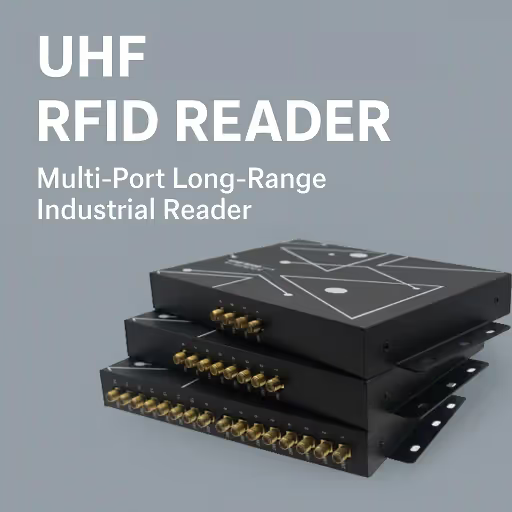
Fixed RFID Readers
Fixed RFID Reader India and UHF 4-Port Reader Portals
Quote — Get integrated solution
Buy fixed RFID reader India models (865-867 MHz). High-performance 4
-

Smart Kiosks & Gates
HF RFID Security Gate System for Libraries and Retail
₹3,20,000
Protect assets with HF RFID security gate. Advanced library security
-
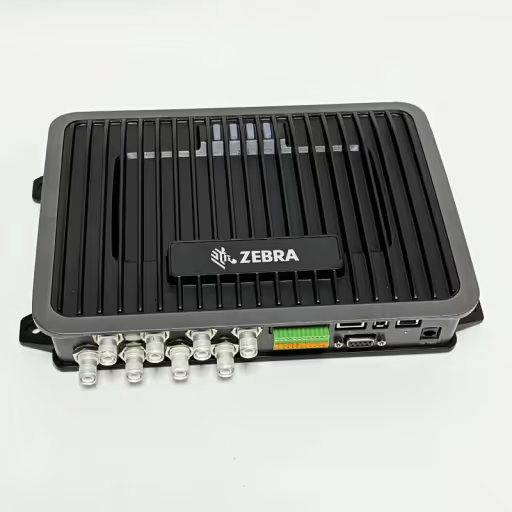
Fixed RFID Readers
Zebra FX9600 Fixed RFID Reader: Price in India (4/8 Port)
₹90,000
Zebra FX9600 fixed RFID reader price in India. Rugged 4-port & 8-por
-

Fixed RFID Readers
Impinj R700 4-Port Enterprise RAIN RFID Reader | Price & Specs India
₹1,25,000
Buy Impinj R700 4-Port Enterprise RAIN RFID Reader in India. -92 dBm
-
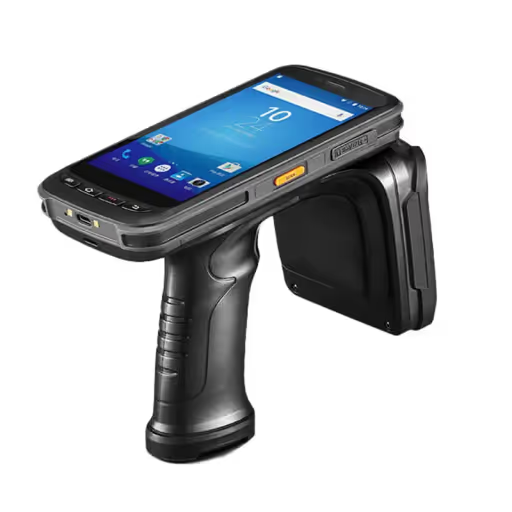
Handheld RFID Scanners
Chainway C72 UHF RFID Reader: Price in India & Specs
₹60,000
Buy Chainway C72 UHF reader at best price in India with official 1-y
-
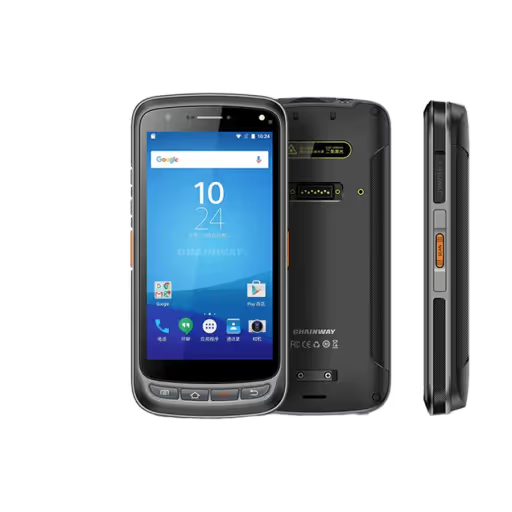
Handheld RFID Scanners
Chainway C71 UHF RFID Handheld Reader India | AUTOID
₹55,000
Buy Chainway C71 UHF RFID Reader in India. Features IP67 rugged buil
-

Handheld RFID Scanners
Zebra RFD40 Premium UHF RFID Standard Sled Scanner
₹1,20,000
Buy Zebra RFD40 Premium UHF RFID Sled Scanner at ₹96,000–₹1,44,000.
-
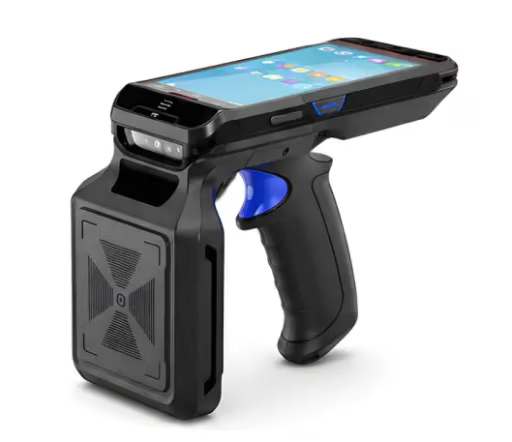
Handheld RFID Readers
Packseals G2 UHF RFID Handheld Scanner (Android 13)
₹40,000
Buy Packseals G2 UHF RFID handheld scanner in India. Android 13, oct
-
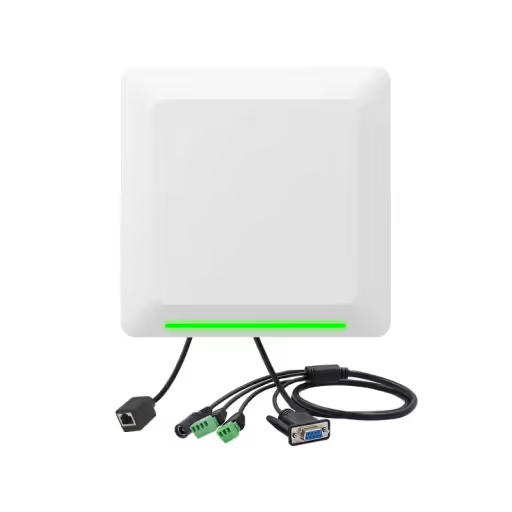
Handheld RFID Scanners
Long-Range RFID Reader: UHF 15m Integrated Scanner (IP67)
₹30,000
Industrial long-range RFID reader with built-in 12dBi antenna. 15m s
-

Smart Kiosks & Gates
Automatic RFID Boom Barrier & 20m Long-Range UHF Reader Kit
₹1,10,000
All-inclusive automatic RFID boom barrier kit with 6m DC servo boom,
-
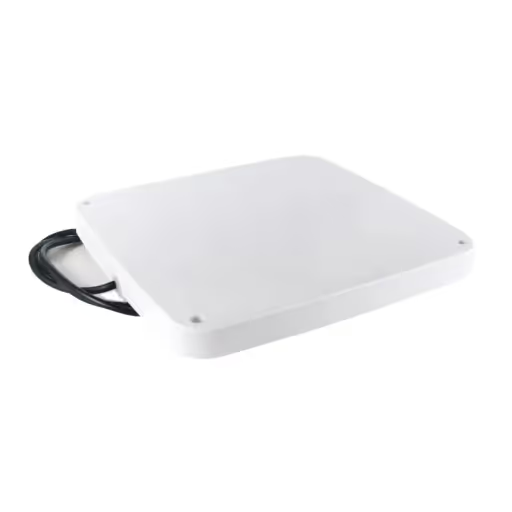
RFID Antennas
UHF Fixed Reader Antenna and Circular Polarized Panel
₹8,000
Optimize signal range with UHF fixed reader antenna. High-gain panel
-
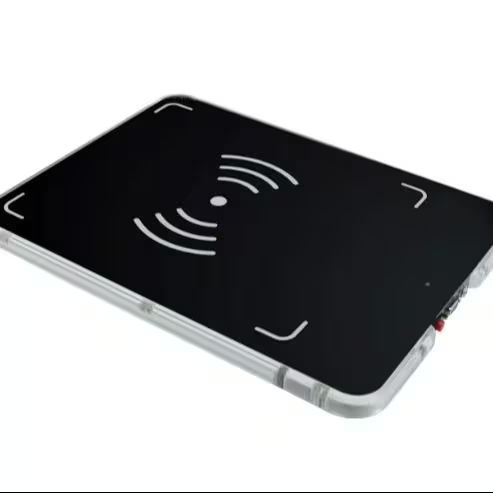
Desktop Encoders
UHF Desktop RFID Reader and Writer USB Tag Programmer
₹14,000
Encode tags at your desk with UHF desktop RFID reader writer. Multi-
-
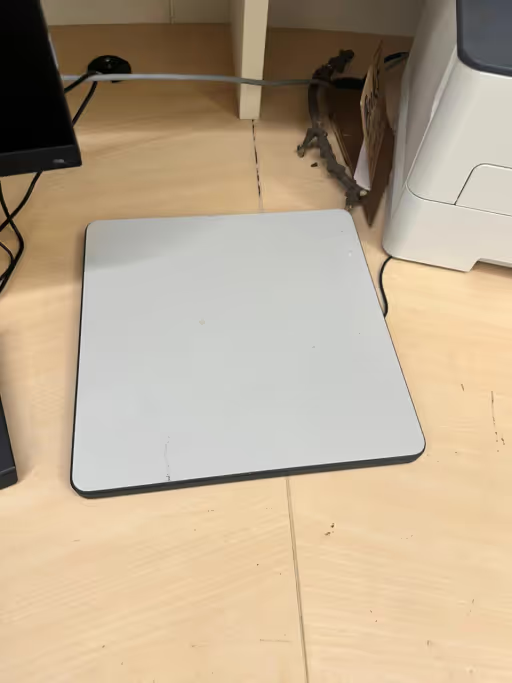
Desktop Encoders
HF Desktop RFID Reader & Writer and USB Smart Card Scanner
₹25,000
Program tags quickly with HF desktop RFID reader writer. USB RFID de
-

Desktop Encoders
Dual Frequency 13.56MHz Mifare + 125KHz EM USB Desktop Reader | 1 Year Warranty
₹2,500
Buy Dual Frequency 13.56MHz Mifare & 125KHz EM USB Card Reader at ₹2
-
Desktop Encoders
Dual Frequency UHF + 13.56MHz Mifare USB Desktop Reader Writer | Free Software
₹20,000
Buy Dual Frequency UHF (865-867MHz) & 13.56MHz Mifare Desktop Reader
-

Rugged Field Tablets
KingKong 2 Ultra-Rugged 10.9" Industrial Android 14 Tablet | MediaTek Helio G99 & 20,400mAh Battery
₹55,000
Buy KingKong 2 Ultra-Rugged 10.9" Industrial Android 14 Tablet in In
-

RFID Label Printers & Encoders
Zebra ZD621R 300DPI UHF RFID Thermal Transfer Desktop Printer
₹1,25,000
Buy Zebra ZD621R 300DPI UHF RFID Thermal Transfer Desktop Printer in
-

RFID Label Printers & Encoders
Zebra ZT411 Industrial UHF RFID Printer & Tag Encoder
₹2,20,000
Buy Zebra ZT411 4-Inch Industrial UHF RFID Printer & On-Metal Encode
-

RFID Printers & Encoders
SATO CL4NX Plus Industrial UHF RFID Printer & Encoder
₹2,65,000
Buy SATO CL4NX Plus Industrial UHF RFID Printer at ₹2,12,000–₹3,18,0
Explore Industrial Hardware Categories & Form Factors
Access technical architectural blueprints, GPIO pinout diagrams, and developer SDK documentation.
Fixed Gate Readers & Portals
High-power industrial gateways (Zebra FX9600, Impinj Speedway R700) with PoE+, Linux OS, and 1,200+ tag/sec read rates for warehouse dock doors and conveyor lines.
Rugged Handheld Scanners
Android 11/13 mobile terminals (Chainway C72, C71, Packseals G2) featuring integrated 4 dBi circular antennas, 8000mAh batteries, and 15m inventory sweep ranges.
Integrated Parking & Barrier Readers
All-in-one IP67 readers combining internal 9 dBi / 12 dBi antennas with built-in Wiegand / RS485 controllers for automatic boom barrier FASTag lanes and vehicle gates.
Desktop Encoders & RFID Printers
Zebra ZD621R, ZT411, and SATO CL4NX Plus industrial 300 DPI printers for simultaneous EPC encoding and barcode printing, plus USB desktop near-field commissioning pads.
OpenRFID SDKs & Middleware
Pre-compiled .NET 8 LLRP connectors, Android Kotlin SDKs, Python MQTT subscribers, and SAP/Tally ERP middleware drivers with ready-to-run GitHub code repositories.
Antenna Beam & Coverage Tool
Model 3dB HPBW ground coverage footprint ellipses, conveyor tag dwell times, and 1st Fresnel zone clearance radii for dock door and overhead portal designs.
Real-World Hardware Testing: Handheld Inventory vs Long-Range Barrier Portals
Direct laboratory range tests and unboxings verifying antenna gain, read rates, and WPC 865–867 MHz tuning.
Chainway C72 UHF RFID Handheld Terminal: 15m Range & Android Inventory Audit
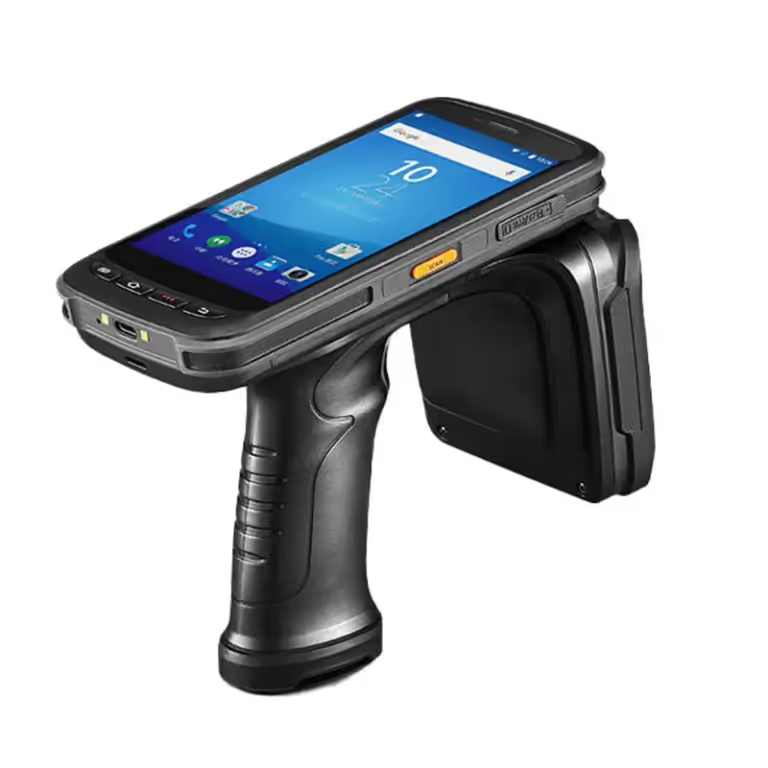
Laboratory range sweep and Geiger-counter audio tag locator demo with the Android 11 Chainway C72 mobile computer.
UHF Integrated Long-Range Reader: 20m Vehicle Access & FASTag Barrier Unboxing
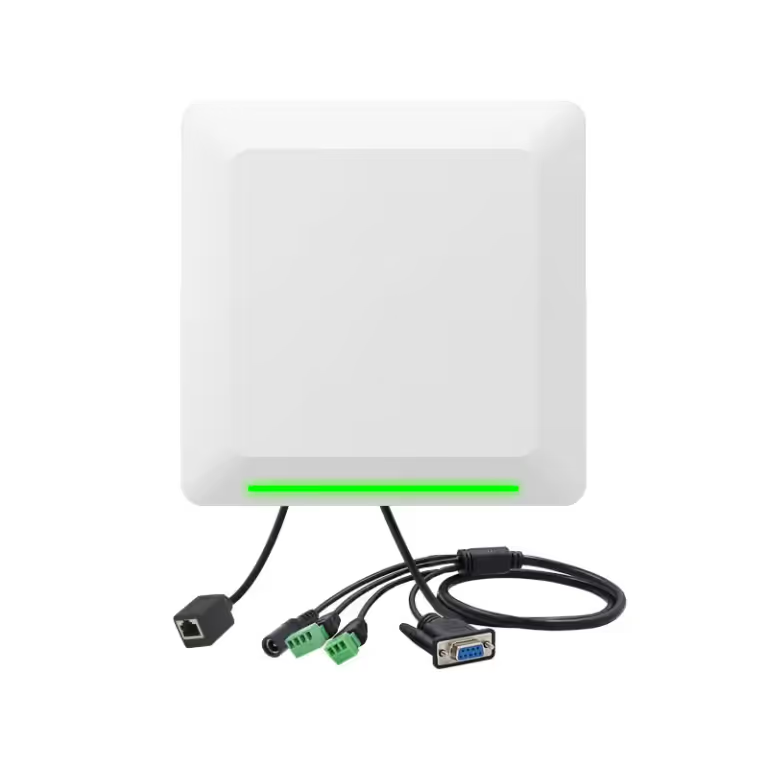
Unboxing, antenna alignment, and Wiegand / RS485 trigger wiring for the 20m integrated parking gate reader.
RFID Reader Comparison Engine (Impinj vs Zebra vs Chainway)
| Technical Specification | Impinj Speedway R700 | Zebra FX9600 Industrial Reader |
|---|---|---|
| Core RF Chipset Engine | Impinj E710 Core | Impinj Indy R2000 Core |
| Receiver Sensitivity (Rx) | -92 dBm | -88 dBm |
| Max Transmit Power (Tx) | 33 dBm | 33 dBm |
| Antenna RP-TNC Ports | 4 Ports | 8 Ports |
| Max Read Throughput | ~500 tags/sec | ~1000 tags/sec |
| Operating System & Edge Runtime | Embedded Linux (Impinj IoT Device Gateway) | Embedded Linux / Zebra Core |
| Environmental Ingress Protection | IP50 (Indoor / Enclosure required) | IP53 Die-Cast Aluminum |
| Approximate Indian Hardware Price | ₹165,000 | ₹185,000 |
Impinj Speedway R700: Best Fit
- • High-speed conveyor sortation
- • High-density dock door portals
- • Item-level retail analytics
Zebra FX9600 Industrial Reader: Best Fit
- • Forklift mounted readers
- • Harsh factory environments
- • 8-antenna multi-door portals
RFID Antenna Beam & Coverage Calculator
Model 3dB HPBW ground coverage ellipse, conveyor dwell time, and 1st Fresnel zone clearance radius.
1. Antenna Mounting & Geometry
2. Motion Dynamics & Portal Speed
Ellipse Width: 5.15m × Length: 6.72m
Electromagnetic Principles of RFID Reader Link Budgets & WPC Compliance
Passive UHF RFID reader systems operate as monostatic radar interrogators governed by Friis transmission equations, two-way radar backscatter path loss, and strict national spectrum emission caps.
01. Friis Two-Way Radar Backscatter Link Budget
The interrogation link is constrained by two distinct electromagnetic stages: (1) Forward downlink power transfer to wake up the silicon tag die, and (2) Reverse uplink backscatter detection by the reader receiver:
At 866 MHz (wavelength λ = 0.346m), path loss over 10 meters is approximately −51.2 dB. If reader transmit power is +30 dBm (1W conducted) and antenna gain is 9 dBi, the reader delivers sufficient downlink power. Crucially, the reverse link depends on reader receiver sensitivity: the Impinj Speedway R700 delivers an extraordinary −92.0 dBm receiver sensitivity, decoding faint tag signals up to 18m away where cheaper readers fail.
02. Antenna Beamwidth (HPBW) & 3dB Ground Footprint Ellipse
Antenna directivity is inversely proportional to its horizontal and vertical half-power beamwidths:
A standard 9 dBi panel provides a symmetric 65° × 65° circular beam, creating an elliptical ground footprint when tilted. For conveyor lines running at velocity v_conveyor, tag dwell time inside the 3dB beam footprint must satisfy t_dwell = 2a / v ≥ 15 ms to allow the reader's Gen2 Q-algorithm to complete inventory query rounds and singulate multi-tag batches.
Ministry of Communications (DoT) Gazette Notification G.S.R. 564(E)
All devices in our catalog operate strictly within the 865.0 MHz to 867.0 MHz band with conducted output power ≤ 1 Watt (30 dBm) and radiated power ≤ 4 Watts EIRP (36 dBm). Unlike imported US FCC 902–928 MHz equipment which interferes with Indian mobile telecom networks, our devices are 100% compliant for enterprise deployment in India.
Frequently Asked Questions
Technical specifications regarding 4-port vs 8-port gateways, handheld mobile computers, antenna coverage, and WPC regulations.
What is the typical RFID scanner price in India for warehouse operations?
What is the difference between an RFID scanner and an RFID reader?
What is the operational difference between a 4-Port and 8-Port fixed RFID reader?
Are all RFID readers and scanners sold by RFID Softwares compliant with Indian WPC regulations?
What read range and tag read rate can I expect from the Chainway C72 UHF handheld scanner?
Do your fixed RFID readers support LLRP, MQTT, and direct SAP / ERP integration?
When should I choose Circular Polarized vs Linear Polarized antennas for fixed reader portals?
Need Hardware Recommendations or a Formal B2B Quotation?
Chat directly with an RF systems engineer on WhatsApp to review your warehouse dock dimensions, conveyor belt speeds, or handheld terminal fleet requirements. Get instant GST proforma invoices and next-day dispatch from our Delhi-NCR facility.