
Turnkey Systems & Engineering
Turnkey RFID Solutions & Industrial Systems
Scalable, industrial-grade RFID systems engineered for automated warehouse WMS, manufacturing WIP, asset tracking, and real-time ERP synchronization.
Industry RFID ROI & Capital Payback Calculator
Model exact annual labor hours saved, inventory shrinkage reduction, and capital payback months for your facility.
Warehouse & 3PL Logistics
Featured Flagship System Blueprints
RFID Smart Card Solutions: Cashless Campus & DESFire Auth
Enterprise RFID smart card authentication: MIFARE Classic vs DESFire EV3 AES-128, offline cashless canteen POS architecture, C# reader polling & turnstiles.
RFID Vehicle Tracking & Automated FASTag Toll Management
High-speed FASTag / UHF windshield vehicle identification, automated toll barriers, fleet gate dispatch, and ANPR camera integration.
29 Turnkey RFID Solutions by Sector
Each module includes custom on-metal or washable tag selection, fixed reader mounting, edge anti-jitter middleware, and pre-built ERP connectors.
- Turnkey Module Explore Specs →RFID Inventory Management Software & Systems in India (2026)
Enterprise RFID inventory management software for Indian warehouses. Sub-2s carton audits, real-time GST E-Way sync, and Tally/SAP ERP connectors. Book demo.
SAP / Tally Ready ✓ 99%+ Accuracy - Turnkey Module Explore Specs →RFID Warehouse Management System Architecture: Dock Doors & ERP Sync Blueprint
Engineering blueprint for automated RFID warehouse tracking. Dock door portal geometry, 1,200 tag/sec dense reader modes, forklift mounts, and SAP BAPI / Tally sync.
SAP / Tally Ready ✓ 99%+ Accuracy - Turnkey Module Explore Specs →UHF RFID Software India: Edge Middleware & LLRP SDK
Enterprise UHF RFID software & LLRP middleware in India. Sub-10ms tag deduplication, SAP/Tally sync, WPC compliance & free developer trial. Pan-India support.
SAP / Tally Ready ✓ 99%+ Accuracy - Turnkey Module Explore Specs →RFID Asset Tracking Software & Systems: On-Metal IT Audits
Enterprise RFID asset tracking software in India. Mobile Geiger-counter radar, on-metal IT server tagging, and automated FAR audit reconciliation.
SAP / Tally Ready ✓ 99%+ Accuracy - Turnkey Module Explore Specs →RFID Library Management System: Self-Checkout Kiosks & Koha Sync
Comprehensive RFID library management system engineering for Indian universities. 3D anti-theft EAS security gates, ISO 28560 HF/UHF tag models & ILS integration.
SAP / Tally Ready ✓ 99%+ Accuracy - Turnkey Module Explore Specs →Retail RFID Inventory System Architecture: Anti-Theft Gates & Stock Audits
Comprehensive blueprint for UHF retail RFID deployments. 58 kHz AM vs UHF overhead security gates, 18-minute 45,000-garment stocktaking, and shrinkage elimination.
SAP / Tally Ready ✓ 99%+ Accuracy - Turnkey Module Explore Specs →RFID Hospital Management System: Asset & Patient Tracking
Hospital RFID system for ICU equipment tracking, rental asset utilization, and patient safety in Indian healthcare networks.
SAP / Tally Ready ✓ 99%+ Accuracy - Turnkey Module Explore Specs →Apparel Factory RFID Packing Tunnel System: 3-Second Box Audit Blueprint
Industrial engineering blueprint for garment export factories. 300+ garment inspection tunnels in under 3 seconds, RF shielded chambers, and 100% packing claim prevention.
SAP / Tally Ready ✓ 99%+ Accuracy - Turnkey Module Explore Specs →RFID Jewelry Management: Smart Trays & Vault Tracking
Enterprise RFID jewelry management & tracking. Near-field smart tray audits, dumbbell tags & 15-minute 10,000-item vault stock reconciliation. Free trial.
SAP / Tally Ready ✓ 99%+ Accuracy - Turnkey Module Explore Specs →RFID Smart Locker System India: Asset & IT Equipment
Enterprise RFID smart locker system in India for corporate IT assets, tools & weapons. Touchscreen kiosk, automated employee card swipe & live cloud audit logs.
SAP / Tally Ready ✓ 99%+ Accuracy - Turnkey Module Explore Specs →RFID for ACP Sheets India | Metal Panel Tracking System
Automate ACP sheet inventory and dispatch with patented 3D RFID flag tags. Impinj M830 chip, 3M LSE adhesive, and staggered stack burst reading up to 5 meters.
SAP / Tally Ready ✓ 99%+ Accuracy - Turnkey Module Explore Specs →Cashless Canteen Management System: RFID Smart POS & Gate
Turnkey cashless canteen management system in India. Sub-second card tap billing, automated shift meal subsidies, payroll deductions and turnstile gate kits.
SAP / Tally Ready ✓ 99%+ Accuracy - Turnkey Module Explore Specs →RFID Tag Applicator Systems | Automatic Print & Apply India
High-speed automatic RFID tag applicator systems for packaging conveyors in India. Pairs with Zebra ZD621R printer for 120 boxes/min carton RFID compliance.
SAP / Tally Ready ✓ 99%+ Accuracy - Turnkey Module Explore Specs →On Metal RFID Asset Tracking | Industrial Anti-Metal Tags
Industrial on-metal RFID asset tracking across India. Printable flexible anti-metal labels, ABS hard tags & ceramic tags for IT servers, machinery & RTI.
SAP / Tally Ready ✓ 99%+ Accuracy - Turnkey Module Explore Specs →RFID ERP Integration Solutions | SAP, Tally & Zoho Sync
Seamless RFID ERP integration for Indian enterprises. Real-time two-way sync for SAP B1, Tally, Zoho & Marg with edge middleware and offline local buffers.
SAP / Tally Ready ✓ 99%+ Accuracy - Turnkey Module Explore Specs →Custom Embedded RFID Readers | OEM UHF Modules in India
OEM custom embedded RFID reader modules in India. Integrate Impinj E710 micro-boards with TTL, RS232 & Wiegand for turnstiles, kiosks & medical equipment.
SAP / Tally Ready ✓ 99%+ Accuracy - Turnkey Module Explore Specs →Pharma RFID Cold Chain Architecture: -80°C Cryo Tags & FDA 21 CFR Part 11
Technical blueprint for hospital & pharma cold storage. Passive UHF tags inside closed glass/steel fridges, real-time temperature loggers, and CDSCO/NABL compliance.
SAP / Tally Ready ✓ 99%+ Accuracy - Turnkey Module Explore Specs →RFID Gate Attendance System Design: High-Throughput Turnstiles & Bus Tracking
Architecture blueprint for campus & factory gate attendance. Processing 50+ students or workers per second at pedestrian turnstiles, UHF long-range reader angles, and SMS gateways.
SAP / Tally Ready ✓ 99%+ Accuracy - Turnkey Module Explore Specs →RFID Vehicle Parking & Boom Barrier Architecture: Residential & Commercial Access
Engineering guide for corporate campuses & residential townships. Windshield tag RF penetration, 12 dBi directional antenna alignment, and FASTag / ANPR camera sync.
SAP / Tally Ready ✓ 99%+ Accuracy - Turnkey Module Explore Specs →MNRE Solar Panel RFID Tracking System | ALMM Module Inlays
Complete MNRE compliant solar panel RFID tracking system with 25-year laminate tags, high-speed flash test IV encoding, and DISCOM ALMM audit verification.
SAP / Tally Ready ✓ 99%+ Accuracy - Turnkey Module Explore Specs →RFID Laundry Management System: Hospital & Hotel Linen
Industrial RFID laundry management system for hotels & hospitals. Heat-resistant washable tags (200 cycles) & bulk 3-second roll-cage dock portals. Same-day demo.
SAP / Tally Ready ✓ 99%+ Accuracy - Turnkey Module Explore Specs →Cattle Livestock RFID Ear Tag Tracking | Bharat Pashudhan
Bharat Pashudhan & NDDB compliant RFID cattle ear tags with tamper-evident Pashu Aadhaar tracking, ergonomic stick readers, and dairy cooperative AMCS sync.
SAP / Tally Ready ✓ 99%+ Accuracy - Turnkey Module Explore Specs →Aerospace Smart Tool Crib Tracking: FOD & AS9100
Aerospace RFID smart tool crib tracking for aircraft MRO. Prevent FOD, automate tool issue/return with micro on-metal tags & AS9100 calibration lockout.
SAP / Tally Ready ✓ 99%+ Accuracy - Turnkey Module Explore Specs →Commercial Fleet Tyre RFID Tracking System | CPKM Retread
Maximize fleet tyre life and eliminate roadside tyre theft with ISO 20909 vulcanized RFID tags, 5-second drive-through portals, and CPKM retread tracking.
SAP / Tally Ready ✓ 99%+ Accuracy - Turnkey Module Explore Specs →RFID Court File Document Tracking System | Judicial Record
Eliminate misplaced judicial case files with smart RFID document tags, 30-second handheld wand finding, and e-Courts CIS chain-of-custody tracking.
SAP / Tally Ready ✓ 99%+ Accuracy - Turnkey Module Explore Specs →RFID Emergency Mustering & Evacuation Headcount System
Automated RFID emergency mustering system. Real-time evacuation headcount, assembly point muster portals & roll-call tablets for plants & factories.
SAP / Tally Ready ✓ 99%+ Accuracy - Turnkey Module Explore Specs →Centralized Smart Hotel Door Management System: Wi-Fi Locks
Centralized hotel door lock management system with Wi-Fi connected smart locks from ₹11,500 and cloud software starting ₹60,000. Remote unlock, live audit logs & time-fenced staff access.
SAP / Tally Ready ✓ 99%+ Accuracy - Turnkey Module Explore Specs →Smart Grocery & Supermarket POS Billing RFID Software
Enterprise supermarket POS billing and grocery inventory software with hybrid barcode & RFID scanning, weighing scale sync, customer credit ledger & GST invoicing.
SAP / Tally Ready ✓ 99%+ Accuracy - Turnkey Module Explore Specs →RFID Fuel Management System: Automated Vehicle Dispense
Turnkey RFID automated fleet fueling system: Wireless nozzle reader antennas, vehicle tank RFID inlet tags, anti-siphoning, and Gilbarco/Wayne dispenser integration.
SAP / Tally Ready ✓ 99%+ Accuracy
Experience RFID Solutions in Real-Time Physics Simulations
Before purchasing hardware or signing turnkey contracts, observe RF radiation envelopes, tag interrogation speeds, and ERP triggers in our interactive 2D and 3D simulation models.
Forklift Pallet Ingest Portal
Sub-second 24-carton interrogation, directional photocells & PO validation.
Warehouse RTLS & Stock Depletion
Multi-zone overhead reader grid tracking stock depletion as pickers move boxes.
Campus Walk-Through Gate
High-density student gate throughput without bottlenecks or card tapping.
Edge-to-ERP Data Pipeline Blueprint
How Turnkey Enterprise RFID Automation System ingests thousands of physical tag reads per minute, suppresses duplicate RF bounces, and synchronizes with your central ERP in sub-second intervals.
The Problem Solved in Plain English:
Standard RFID readers flood servers with 50,000 raw scans every minute, crashing databases with duplicate reads. Our middleware acts as a smart edge filter—it recognizes when the same item sits in front of a scanner, registers it exactly once, and queues the data locally so no scans are lost even if warehouse Wi-Fi drops.
RF Backscatter
UHF tags energize via 865–867 MHz CW carrier wave. Backscatters 96-bit SGTIN EPC identifiers.
• Anti-collision: Q-algorithm
Lock-Free Channel
Reads stream across high-speed LLRP / TCP sockets into an in-memory ring buffer with bounded backpressure.
• Latency: < 2.5ms jitter
Sliding Cooldown
Central 60-second sliding window filters duplicate reflections across adjacent gates before storage.
• Offline auto-reconnect
Enterprise ERP Post
Gzip-compressed batch payloads dispatch via REST webhook or direct OData / XML connector to ERP.
• Retries: Exponential backoff
Architecture Comparison: Traditional vs. OpenRFID Edge Engine
| Operational Factor | Traditional Direct-to-DB Connection | OpenRFID High-Scale Edge Architecture |
|---|---|---|
| Network Downtime / Wi-Fi Loss | ❌ Scans are permanently lost; inventory mismatch occurs. | ✅ Scans buffer to local SQLite WAL queue and auto-sync when restored. |
| Duplicate Tag Reads | ❌ 100+ DB transactions per second for the exact same physical tag. | ✅ 60-second in-memory sliding window suppresses redundant scans. |
| ERP System Load | ❌ Heavy server load causes timeout errors on ERP billing APIs. | ✅ Consolidated 1,000-EPC compressed batches post in single atomic calls. |
Proven in Production: Jayaprakash Narayan Library Deployment
Watch our high-frequency RFID gates, automated self-checkout kiosks, and anti-theft screening operate in real time at the Jayaprakash Narayan Library.
On-Site RFID Library Automation & Security Gate Deployment
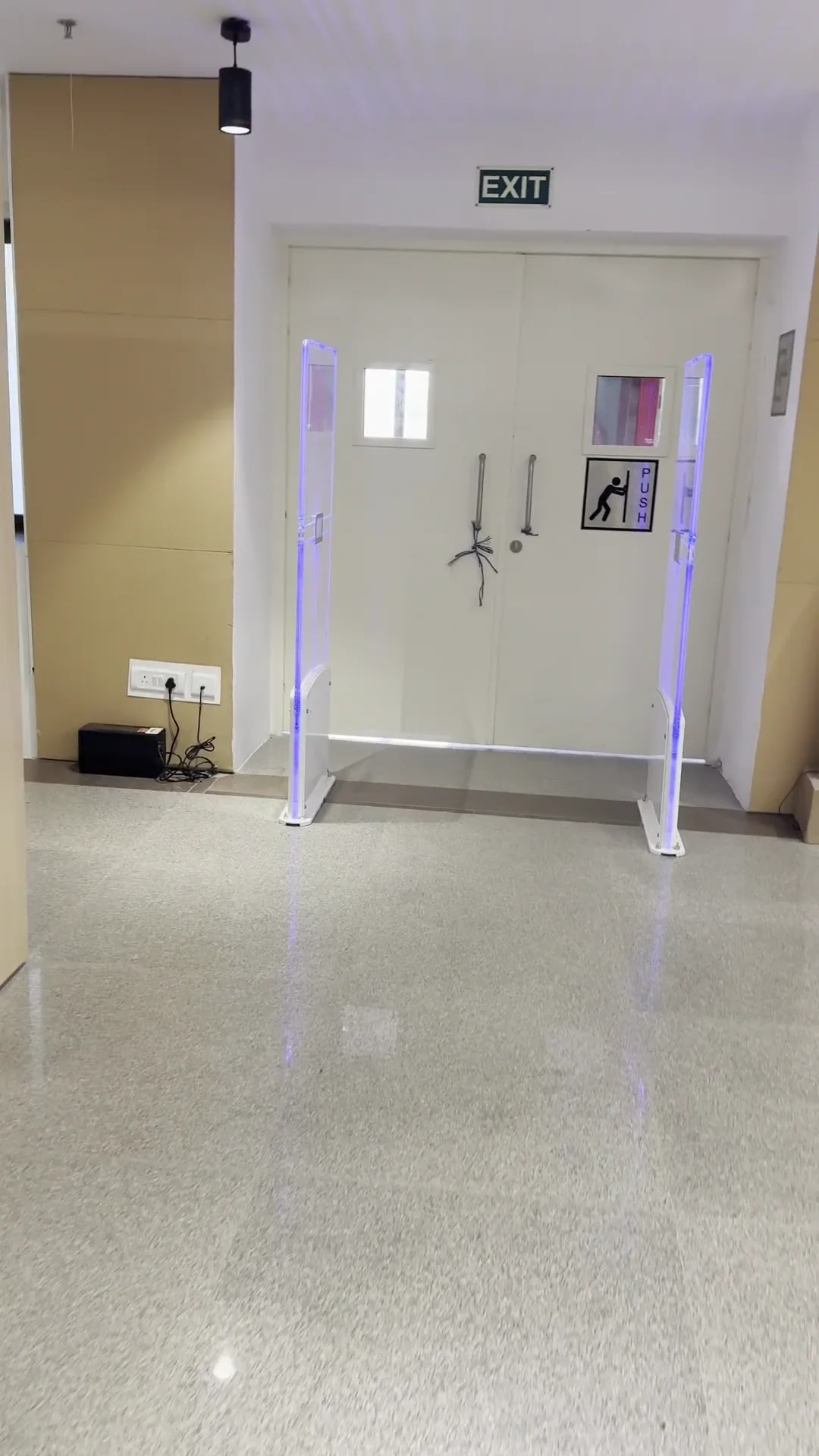
Turnkey deployment of high-frequency RFID smart gates, automated book circulation, and anti-theft screening at Jayaprakash Narayan Library.
Multi-Book Stack Checkout
Anti-Theft Detection Rate
Direct Koha ILS ERP Sync
Evaluating RFID Solutions by Tracking Environment
Unlike barcode scanning which relies on direct line-of-sight, RFID performance is governed by RF wave physics. Selecting the right solution architecture requires analyzing your physical operating conditions before investing in hardware:
1. Metallic & Industrial Surfaces
Metal detunes RF tag antennas. Choose solutions featuring On-Metal PCB or ABS Hard Tags paired with fixed 4-port readers and circular polarized antennas to maintain 4–10m read ranges on machinery, steel pallets, and ACP sheets.
2. Liquids, Chemicals & Cold Storage
Water and alcohol absorb UHF RF energy. Select specialized Flag Tags or Dielectric Standoff Transponders paired with edge RSSI peak-filtering to track edible oil barrels, pharmaceutical vials, and refrigerated blood bags.
3. High-Speed Gate & Dock Portals
For forklift transit through dock doors, implement Overhead Ceiling Readers & Fixed Portals with optical direction sensors and 100ms deduplication filters to ensure only exiting pallets trigger dispatch entries.
4. High-Density Apparel & Retail
For garment showrooms and retail racks, deploy Handheld Android Terminals for 10k-item/hour cycle counts combined with Acoustic Magnetic (AM 58 kHz) Anti-Theft Gates at store exits.
5. Library Circulation & Self-Checkout
Deploy HF (13.56 MHz) or UHF Book Inlay Tags integrated via SIP2 middleware to Koha Integrated Library Systems, enabling multi-book stack checkouts in under 3 seconds.
6. Corporate IT & Tool Custody
Replace manual sign-out logbooks with RFID Smart Locker Cabinets controlled by on-premise Mini-PCs and employee access cards for 24/7 self-service asset handover.
Frequently Asked Questions
Engineering insights on hardware compatibility, WPC regulations, and enterprise ERP integration.
How do I determine which RFID solution fits my facility?
How long does an end-to-end RFID deployment typically take in India?
Can an RFID solution operate in facilities with poor or no internet?
Are your solutions hardware-agnostic across reader brands?
Are your RFID readers and systems compliant with India's WPC regulations?
How does your middleware prevent ghost reads and database crashes from tag floods?
Ready to Deploy Enterprise RFID in Your Facility?
From preliminary RF site surveys and tag-on-metal testing to custom C# / Node.js edge middleware and direct SAP / Tally integration, our engineering team delivers 100% turnkey hardware and software execution.