
1. The Reality of Modern RFID Badge Cloning
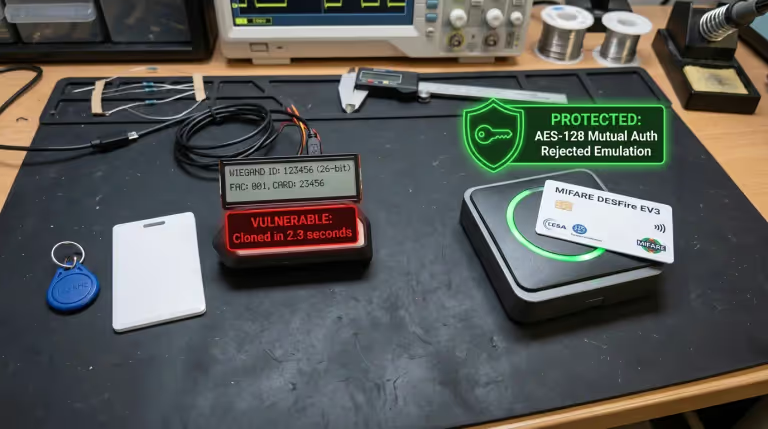
Over 65% of commercial facilities worldwide still rely on legacy RFID badge systems installed in the early 2000s. With the emergence of portable, affordable penetration testing hardware such as the Flipper Zero, Proxmark3 RDV4, and smartphone NFC apps, these legacy badges can now be cloned by untrained adversaries in seconds.
2. Master RFID Credential Comparison Matrix
Here is the technical engineering breakdown of every major commercial RFID and smart card credential format:
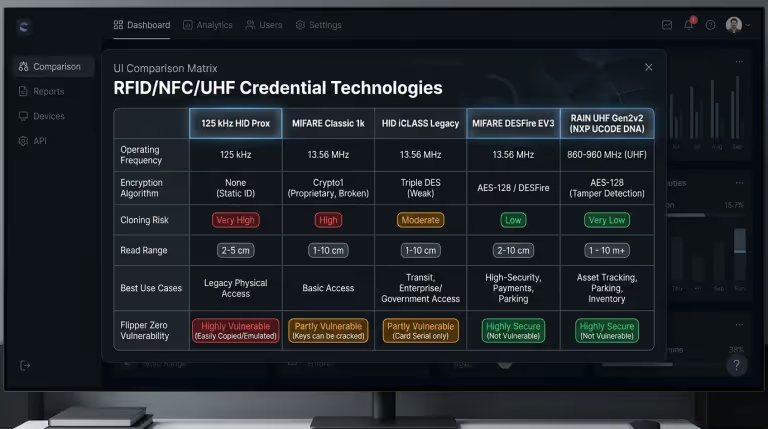
| Credential Type | Frequency | Encryption Cipher | Cloning Resistance | Primary Attack Vector | Recommended Migration |
|---|---|---|---|---|---|
| HID Prox (1326 ProxCard II) | 125 kHz LF | None (Plaintext Wiegand) | Zero (Level 1) | Sniffed & Cloned in 3s | HID Seos / DESFire EV3 |
| EM4100 / TK4100 | 125 kHz LF | None (Fixed 64-bit ID) | Zero (Level 1) | $10 Blue Handheld Cloner | MIFARE DESFire EV3 |
| MIFARE Classic (1K / 4K) | 13.56 MHz HF | Crypto1 (Broken 48-bit) | Legacy (Level 2) | Nested / Darkside Key Attack | MIFARE DESFire EV3 |
| HID iCLASS Legacy | 13.56 MHz HF | 64-bit DES (Master Key Leaked) | Low (Level 2) | iCLASS Elite Master Key Leak | HID Seos 8K |
| MIFARE Plus EV2 | 13.56 MHz HF | AES-128 / SL3 Mode | High (Level 3) | Implementation Flaws only | Secure (Keep Updated) |
| MIFARE DESFire EV3 | 13.56 MHz HF | AES-128 / 3DES Hardware | Maximum (Level 4) | Zero Known Clones | Current Industry Standard |
| HID Seos | 13.56 MHz HF | AES-128 / Secure Messaging | Maximum (Level 4) | Zero Known Clones | Current Enterprise Standard |
| Standard RAIN UHF (Gen2v1) | 865–867 MHz | None (Plaintext EPC) | Low (Level 1) | Air Sniffing & Rewritable Tag | Gen2v2 AES-128 Crypto |
| Cryptographic RAIN UHF (Gen2v2) | 865–867 MHz | AES-128 (ISO 29167-10) | Maximum (Level 4) | Zero Known Clones | Current Supply Chain Standard |
3. The Flawed Logic of "HF is inherently more secure than UHF"
A frequent architectural misconception among IT security officers is that 13.56 MHz HF is inherently secure while 865 MHz UHF is inherently insecure.
This is factually false:
- A basic 13.56 MHz NFC sticker (NTAG213) broadcasting a static URL or UID has zero cryptographic protection and can be cloned by any Android/iPhone.
- A Gen2v2 865 MHz RAIN UHF tag (NXP UCODE DNA) executing ISO 29167-10 AES-128 challenge-response is orders of magnitude more secure than a 13.56 MHz MIFARE Classic 1K badge.
Security is entirely governed by the microchip's cryptographic architecture and key management lifecycle, not by the operating RF carrier frequency.
4. Migration Strategy: Upgrading Enterprise Access Control
Transitioning 5,000 employees from legacy HID Prox to MIFARE DESFire EV3 or HID Seos does not require a complete overnight teardown:
- Install Multi-Technology Readers: Modern readers (such as HID Signo or STid Architect) can read 125 kHz Prox, 13.56 MHz DESFire EV3, and Mobile NFC/BLE credentials simultaneously.
- Issue Dual-Chip Cards: Deploy combo credentials containing both a legacy 125 kHz coil and a 13.56 MHz DESFire EV3 chip.
- Disable Legacy Formats: Once 100% of badges are replaced, update reader firmware via OSDP v2 (Open Supervised Device Protocol) to disable 125 kHz listening mode permanently.
Ready to Upgrade Your Enterprise RFID Security?
Contact our hardware engineers for access control badge audits, OSDP reader configurations, and secure dual-frequency credentials.