Engineering Service ✓ Pan-India Dispatch WPC & GS1 Compliant

RFID Site Survey & Feasibility Services

On-Site RF Spectrum Audit, Electromagnetic Interference (EMI) Mapping & Reader Geometry Planning

Timeline 2 - 5 Days
Investment ₹25,000 - ₹85,000
Base Starting ₹25,000
RFID Site Survey and Feasibility Inspection in Indian Warehouse
Certified Deployment Engineering India Coverage
Senior RF Field Engineers
BOM & CAD Audit Handover
Turnkey Hardware + SW

Overview & Technical Scope

De-Risk Your Enterprise RFID Deployment with RF Physics & Spectrum Verification

Deploying UHF RFID in industrial environments without a rigorous RF site survey is the #1 cause of failed pilot projects. Metal racking, high dielectric liquids, motorized conveyors, and industrial welding equipment introduce electromagnetic interference (EMI), multipath signal reflections, and destructive RF null zones.

Our engineering team conducts comprehensive on-site RF spectrum audits across manufacturing plants, high-bay warehouses, distribution centers, and corporate facilities throughout India. We verify the local electromagnetic environment within the 865–867 MHz frequency band (WPC India compliant) to eliminate blind spots before you commit CapEx.

Core Engineering Methodologies Conducted On-Site

  1. RF Spectrum & Ambient Noise Floor Mapping: We utilize calibrated handheld RF spectrum analyzers to map background noise, rogue frequency emitters, cellular LTE bleed, and motorized harmonics down to -105 dBm.
  2. Antenna Geometry & Multipath Reflection Analysis: Using portable mast-mounted circular and linear polarized antennas, we identify signal bounces off steel beams, corrugated roofs, and aluminum foils that cause unwanted stray tag reads or signal phase cancellations.
  3. Tag Substrate Attenuation & Dielectric Testing: We test multiple IC chip designs (Impinj Monza R6-P, NXP UCODE 9, Alien Higgs 9) directly against your actual SKU packaging, evaluating dielectric absorption across liquids, metals, corrugate, and high-density timber.
  4. Dock Door & Conveyor Dynamic Read Rate Trials: We simulate forklift travel speeds (8–15 km/h) and high-speed conveyor lines (up to 120 ft/min) to determine required reader transmit power (ERP) and antenna beamwidth overlap.

Key Features & Service Inclusions

Standard inclusions engineered into every deployment cycle:

✓ On-site RF spectrum analysis covering WPC India 865-867 MHz de-licensed bands
✓ Multipath reflection and RF dead-zone mapping across metal racking and conveyor lanes
✓ Dynamic tag read-rate trials at forklift speeds up to 15 km/h
✓ Material dielectric testing across dense liquids, metallic containers, and corrugate
✓ Complete reader placement blueprints, antenna azimuth angles, and power budget specs
✓ Vendor-neutral Bill of Materials (BOM) recommending Zebra, Impinj, or Chainway hardware
Engineering Field & Lab Footage

See the System in Action: Live Field Demonstration

Real-world testing, spectrum measurements, and production verification in active facilities.

Field Survey Audit

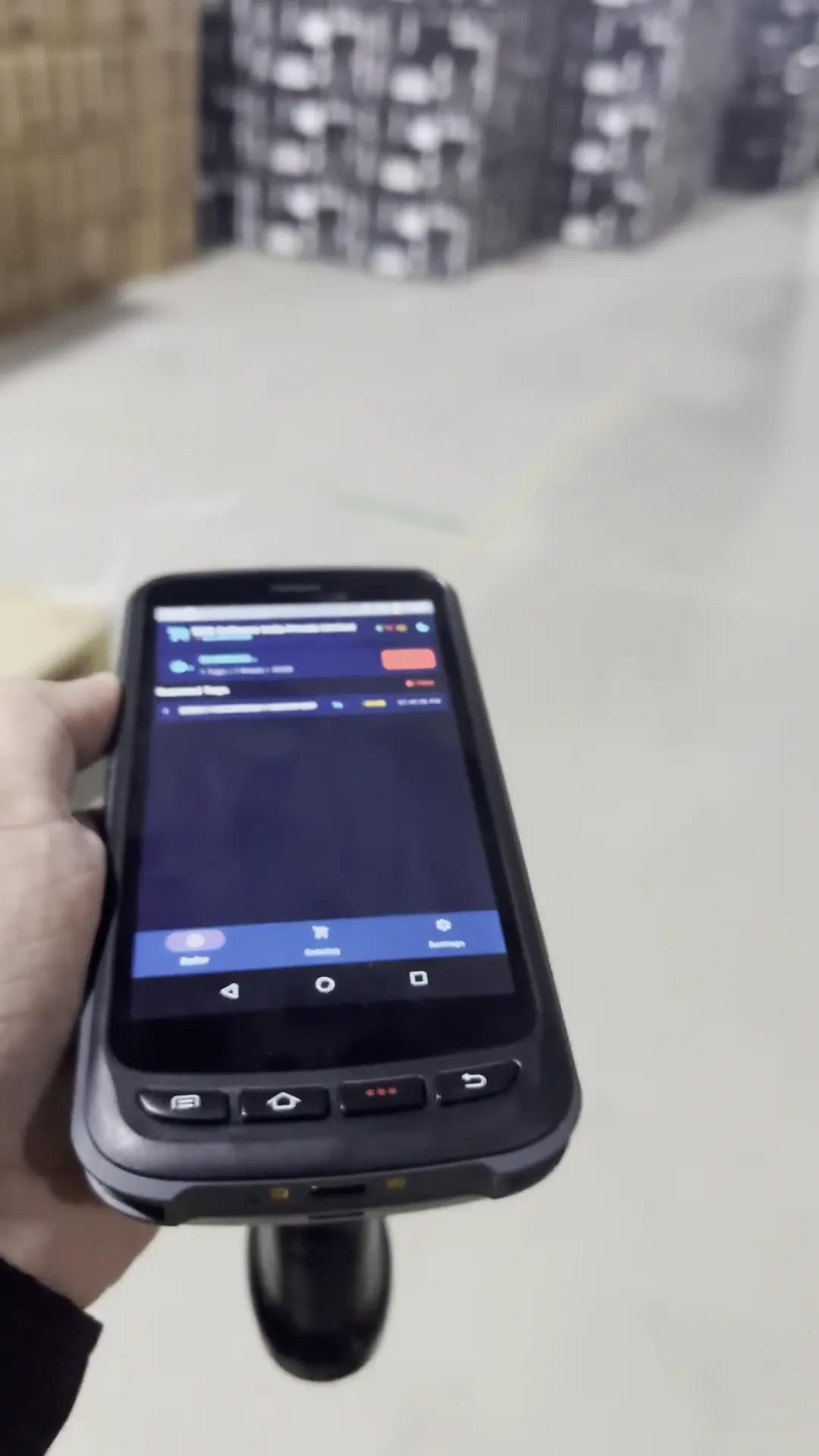
On-Site Handheld & Fixed Reader RF Propagation Test in Active Warehouse
1080p HD
On-Site Handheld & Fixed Reader RF Propagation Test in Active Warehouse
Click to Play Video (1080p HD)

Live engineering walkthrough conducting RF spectrum RSSI measurements across multi-tier racking, metal appliances, and forklift transit paths to map multipath reflections.

Audit-Ready Deliverables

Engineering Deliverables & Documentation Handover

Every project concludes with rigorous engineering artifacts, CAD layouts, test certificates, and signed reports.

  • Calibrated 2D/3D RF Heatmap & Spectrum Interference Report (865-867 MHz)
  • Antenna Position, Elevation Angle & Polarization Specification Blueprint
  • Complete Bill of Materials (BOM) with primary & alternate hardware SKUs
  • Tag Inlay & Substrate Compatibility Matrix for every packaging variant
  • Network Drop, PoE Power Budget & Coaxial Cable Attenuation Schematics
Interactive Engineering Suite

Interactive Engineering Tools & 3D Simulations

Calculate RF link budgets, estimate tag economics, and simulate warehouse portals before physical rollout.

Proven Deployment Outcomes

Enterprise Case Studies & Field Deployments

How Indian and global enterprises solved difficult tracking challenges with this service.

Automotive & Heavy Engineering

Automotive Assembly Plant EMI Audit

Challenge: High-power robotic welding cells created electromagnetic interference in the 865 MHz spectrum, causing intermittent tag drops.
Solution & Outcome: Field spectrum analysis pinpointed exact harmonic noise bands. Re-angled 9 dBi circular antennas with directional back-lobes achieved 99.95% component traceability.
Cold Chain & Pharmaceutical

Cold Storage & High-Moisture Logistics Facility

Challenge: Sub-zero ice condensation and high water content in frozen food cartons severely attenuated UHF RF signals.
Solution & Outcome: Survey determined optimal reader ERP power levels, high-sensitivity NXP UCODE 9 chips, and specialized foam-backed inlays to overcome moisture absorption.

Predictable Deployment Outcomes & 100% WPC Compliance

Eliminate guesswork and costly retrofits. Our site surveys guarantee 99.8%+ read rates from Day 1.

  • 99.8%

    Target Read Accuracy

  • -105 dBm

    Noise Floor Sensitivity

  • 0

    Frequency Licensing Conflicts

Engineering Methodology: How We Work

  1. 1

    Preliminary Facility CAD & Layout Review

    We analyze your architectural drawings, portal dimensions, rack heights, power drops, and forklift pathways to draft an initial RF coverage hypothesis.

  2. 2

    On-Site Spectrum & Noise Floor Measurement

    Our RF engineers arrive with calibrated spectrum analyzers, test antennas, and signal generators to document real-world interference in the 865-867 MHz band.

  3. 3

    Live Tag Readability & Dynamic Trials

    We position test antennas at candidate mounting locations and run dynamic tag reading sweeps with live pallets, cartons, and vehicles under motion.

  4. 4

    Engineering Blueprint & BOM Handover

    You receive a formal RF Feasibility Dossier complete with antenna coordinates, cable loss calculations, network schematics, and vendor-neutral hardware quotes.

Frequently Asked Questions

Why is an RFID site survey mandatory before purchasing hardware in India?
RF physics cannot be simulated reliably from office desks. In India, UHF RFID operates strictly within the 865–867 MHz band governed by WPC regulations with a maximum ERP limit of 4 Watts. Metal structures, machinery EMI, conveyor steel frames, and concrete pillars create reflection nulls and multipath interference. An on-site survey maps these exact conditions to ensure 100% read reliability without hardware over-spending.
What equipment does your engineering team bring during the survey?
Our team brings calibrated RF spectrum analyzers, portable RF signal probes, calibrated 6 dBi and 9 dBi circular/linear antennas, adjustable mounting tripods, portable UHF readers (including Zebra FX9600 and Chainway C72), and an inventory of 30+ tag inlay geometries to benchmark on your actual physical inventory.
How long does an on-site survey take for a typical facility?
A standard distribution warehouse (20,000–50,000 sq ft) with 2 to 4 dock doors takes 1 to 2 days on-site. Complex manufacturing plants with multiple robotic cells, overhead conveyors, or high-density racking may require 3 to 5 business days.
Do we need to stop our warehouse operations during the survey?
No. In fact, we prefer surveying during active operations. Operating forklifts, moving machinery, and normal personnel traffic provide the most realistic electromagnetic environment for testing antenna beam penetration and tag backscatter.
What is the difference between circular and linear polarization during a survey?
Linear polarization delivers maximum read range when tag orientation is strictly known and aligned with the antenna axis. Circular polarization rotates the electric field through 360 degrees, allowing tags to be read regardless of whether cartons are placed horizontally or vertically. We determine the exact polarization required per read zone.
How do you solve RF bleed between adjacent dock doors?
When dock doors are spaced 10–12 feet apart, high-power reader beams can accidentally read tags from neighboring lanes. We solve this by engineering directional antenna down-tilts, optimizing reader RF power down to 24–27 dBm, utilizing opto-isolated photocell sensors for beam triggering, and applying carbon-loaded RF absorber foam where necessary.
Will the survey document include vendor-neutral hardware recommendations?
Yes. RFID Softwares is an independent system architect and middleware engineer. We evaluate hardware purely on technical merits and provide transparent options across Zebra, Impinj, Chainway, and Hopeland readers based on your budget and technical requirements.
How do you test liquid and metal products during the survey?
Liquids absorb UHF RF energy while metals reflect it, detuning standard dipole antennas. During the survey, we benchmark specialized ceramic on-metal tags, foam-spaced wet inlays, and flag-tag geometries directly on your liquid containers and metal assets to identify the exact tag that achieves reliable link budgets.
Pan-India Coverage & On-Site Dispatch

Regional Engineering Hubs & On-Site Dispatch Centers

Our certified RF field engineers and system architects dispatch directly from 12 key industrial hubs across India to conduct feasibility site surveys, gantry installations, and POC trials for RFID Site Survey & Feasibility Services.

Browse All 12 Regional Centers →
Western India

Mumbai & Pune

Nhava Sheva Port, Bhiwandi Warehousing & Chakan Auto Cluster

On-site engineering team covering port logistics, major FMCG warehouses, and automotive OEM plants.

Book Regional Engineer →
Northern India

Delhi NCR Central

Central Delhi, Okhla Industrial Area & Trans-Yamuna

Central headquarters engineering team providing turnkey deployments, hardware servicing, and trials.

Book Regional Engineer →
Northern India

Gurugram & Manesar

Cyber City, Udyog Vihar & Manesar Industrial Corridor

Specialized enterprise IT asset tracking and automotive component manufacturing RFID engineers.

Book Regional Engineer →
Northern India

Noida & Greater Noida

Noida Electronics City & Yamuna Expressway Logistics Hub

Hardware calibration and automated warehouse conveyor tunnel deployment engineers.

Book Regional Engineer →
Southern India

Bengaluru

Electronic City, Whitefield, Peenya & Hosur Belt

Software development center and hardware engineers for aerospace, IT asset rooms, and tech campuses.

Book Regional Engineer →
Southern India

Hyderabad

Genome Valley, HITEC City & Shamshabad Cargo Corridor

Pharma cold-chain tracking, cleanroom RFID compliance, and IT corporate smart locker specialists.

Book Regional Engineer →
Southern India

Chennai

Sriperumbudur, Oragadam & Ennore Port Logistics

Automotive assembly tracking, export container sealing, and electronics factory automation.

Book Regional Engineer →
Western India

Ahmedabad & Sanand

Sanand Automotive, Changodar Logistics & Naroda Industrial

Industrial automation, textile roll identification, and chemical drum on-metal tracking.

Book Regional Engineer →
Western India

Surat

Surat Diamond Bourse & Textile Market Corridor

High-security diamond vault tray readers, jewelry inventory automation, and garment anti-theft gates.

Book Regional Engineer →
Eastern India

Kolkata

Dankuni Logistics, Haldia Port & Howrah Industrial Cluster

Eastern India dispatch covering heavy engineering, tea estate tracking, and river port logistics.

Book Regional Engineer →
Northern India

Agra

Agra Footwear Cluster, Foundry Nagar & Mathura Corridor

Footwear manufacturing batch tracking, retail garment showroom EAS anti-theft gates, and leather goods.

Book Regional Engineer →
Southern India

Tirupur & Coimbatore

Tirupur Knitwear Cluster & Coimbatore Engineering Midc

Textile export bundle tracking, wash-proof UHF garment tags, and industrial loom pump asset tracking.

Book Regional Engineer →
Hi, Can I Help ? 💬
AI