
Resource
Best LIMS Software (2026): Top 10 Lab Systems Compared & Ranked
Compare 2026's best LIMS platforms: AILS, LabWare, SENAITE & LabVantage. See pricing, HL7/ASTM machine interfacing, FDA 21 CFR Part 11 compliance & free trials.

-
2–4 Weeks
Average Cloud LIMS Deployment Time
compared to 6–12 months for legacy enterprise client/server LIMS
-
99.9%
Data Transcription Error Reduction
via automated bi-directional HL7 & ASTM analyzer interfacing
-
Up to 85%
Specimen Rack Audit Acceleration
using integrated UHF RFID desktop readers and 2D DataMatrix tube scanners
-
Free Account Tier ($0)
Lowest Upfront Total Cost of Ownership
instant cloud setup with no per-user client workstation license penalty
HL7 v2.5 & ASTM 1394-91 Specimen Tracking Specification
Bidirectional integration architecture bridging ceramic cryo-vial RFID tags to hospital HIS/LIMS databases with zero specimen misidentification.
Manual barcode scanning of hundreds of blood test tubes leads to fatigue, mislabeling, and lost samples. By placing miniature RFID chips on each sample tube, an entire tray of 100 test tubes is identified in 1.5 seconds—instantly verifying patient MRN, collection time, and required tests before entering automated centrifuge and biochemistry analyzers.
Tag Commissioning
Cryo-resistant UHF tag is paired with Patient MRN at bedside. EPC encodes sample tube ID and test profile code.
Tray Bulk Verification
Automated tray reader reads 100 samples simultaneously, verifying rack order against the analyzer batch worklist.
HL7 Auto-Filing
Analyzer posts diagnostic test results via HL7 `OBX` segment, matching the verified RFID sample directly to the patient chart.
MSH|^~\&|RFID_SPECIMEN_GATE|HOSPITAL_LAB|EPIC_HIS|CENTRAL_DB|20260928143000||OUL^R22|MSG009812|P|2.5
PID|1||MRN9824102^^^HOSPITAL||SHARMA^RAHUL^^^MR||19850412|M
SPM|1|E28011606000020478059012||BLD^Whole Blood|||||||||||20260928081500
OBR|1|ORD549102|LAB88210|CBC^Complete Blood Count|||20260928083000
OBX|1|NM|718-7^Hemoglobin||14.2|g/dL|13.5-17.5|N|||F
LIMS Selection Guidelines: Key Evaluation Criteria for 2026
Selecting the best Laboratory Information Management System (LIMS) is one of the most critical operational decisions a healthcare, life sciences, or industrial laboratory will make. A modern LIMS dictates diagnostic throughput, patient report turnaround times, regulatory audit resilience (FDA 21 CFR Part 11, HIPAA, ISO 15189, NABL), and ongoing IT maintenance overhead.
Today, laboratory informatics has branched into three distinct operational domains:
- Clinical & Diagnostic Pathology Labs: Facilities processing blood, urine, biopsies, and biochemical assays where speed, bi-directional analyzer interfacing (ASTM/HL7), automated WhatsApp/SMS patient report delivery, and billing are paramount.
- High-Regulated Pharmaceutical & Manufacturing QC: Enterprise environments requiring rigorous GxP validation, multi-stage batch release, stability studies, and tamper-proof electronic audit trails.
- Academic & Research Life Sciences: Laboratories managing complex genomics, biobanking cohorts, and assay development requiring an integrated Electronic Lab Notebook (ELN).
To determine the best LIMS software for your facility, evaluate systems across four non-negotiable criteria:
- Direct Equipment Connectivity: Does the platform natively communicate with your automated clinical analyzers (Abbott, Mindray, Roche, Sysmex, Horiba) via bidirectional ASTM E1381/E1394 or HL7 protocols, or does it require third-party middleware licenses?
- Specimen Chain of Custody: Can the system automate tube rack check-ins using modern barcode and UHF RFID tags to eliminate manual specimen unboxing and logging?
- Deployment Velocity & Flexibility: Is the system cloud-native with instant onboarding and a free sandbox tier, or will it tie up your staff in a 6-to-12 month on-premise IT rollout?
- Total Cost of Ownership (TCO): Beyond headline license costs, what are the recurring server hosting expenses, per-seat user fees, and custom report template development charges?
Executive Summary: Best LIMS Software at a Glance (2026 Verdict)
For lab managers, clinical pathologists, and IT procurement teams needing a rapid decision framework, our engineering team evaluated 8 market-leading platforms. Below are the definitive category winners based on architecture, compliance standards, instrument connectivity, and total cost of ownership.
AI Laboratory System (AILS)
The top pick for clinical pathology and hospital diagnostic centers. Connects directly to 80+ analyzers via HL7/ASTM with native RFID tube-rack scanning and instant WhatsApp PDF report delivery.
LabWare LIMS & ELN
The gold standard for multi-national pharmaceutical manufacturing, petrochemicals, and contract testing facilities requiring strict FDA 21 CFR Part 11 and GxP compliance.
SENAITE LIMS
The leading open-source choice for ISO/IEC 17025 accredited environmental, food safety, and analytical testing laboratories with in-house Python/Linux technical teams.
LabVantage LIMS
Modern browser-native enterprise platform uniting LIMS, ELN, and SDMS with tailored modules for cryogenic biobanking, molecular pathology, and multi-site specimen cohorts.
Labguru (BioData)
All-in-one life sciences platform connecting an Electronic Lab Notebook with reagent inventory tracking, plasmid mapping, and experimental automation for biotech startups.
CrelioHealth
Widely deployed across retail outpatient diagnostic chains in emerging markets for automated WhatsApp report delivery, mobile patient check-in, and point-of-sale billing.
| Platform | Category Winner | Deployment | Estimated Pricing | Equipment Connectivity | Action |
|---|---|---|---|---|---|
| AI Laboratory System (AILS) | 🏆 Overall Clinical Cloud | Cloud SaaS (Instant) | Free Tier ($0) / $299 Pro | Native HL7/ASTM for 80+ Analyzers + RFID | Explore AILS ↗ |
| LabWare LIMS | 🏢 Global Enterprise Pharma | Client/Server & Cloud | $50,000 – $250,000+ | Custom Instrument Bridges | Visit Site ↗ |
| SENAITE LIMS | 🔓 Open-Source Testing Labs | Self-Hosted Linux/Docker | $0 License (GPLv2) | Custom Python Scripts | Visit Site ↗ |
| LabVantage | 🧬 Web-Native Biobanking | Browser-Native Java Cloud | Enterprise SaaS / Capex | Proprietary Connectors | Visit Site ↗ |
| CrelioHealth | 📱 Patient CRM & Billing | Cloud SaaS | Monthly Subscription / Seat | Bridge Utility Software | Visit Site ↗ |
| Labguru | 🧪 Biotech R&D + ELN | Cloud SaaS | Per Seat / Month | REST API & Webhooks | Visit Site ↗ |
Top Free & Open-Source LIMS Solutions (Pros, Cons & Hidden Costs)
Open-source laboratory information management systems are popular among academic institutions, non-profit research institutes, and tech-savvy labs with dedicated Linux/DevOps talent. The primary appeal is the elimination of recurring software licensing fees, giving facilities total ownership over their code and data repositories.
1. SENAITE LIMS (Python / Plone)
SENAITE is the global benchmark for open-source ISO/IEC 17025 accredited testing laboratories. Built on the mature Python-based Plone CMS and Zope application server, it provides an exceptional sample lifecycle workflow, custom test parameter calculation, sample receiving sheets, and automated Certificate of Analysis (CoA) generation.
- Strengths: Zero software license fees (GPLv2), active community developer base, fine-grained role-based permissions, robust multi-language support, and native support for ISO 17025 compliance audits.
- Weaknesses: Substantial deployment complexity. Requires dedicated Linux sysadmin expertise and Plone/Zope knowledge. Upgrades can break custom modules, and there is no native ASTM/HL7 analyzer driver engine out of the box without bespoke Python integration.
- Best For: Environmental, agricultural, food safety, and contract analytical testing labs with internal Python programming capabilities.
2. LabKey Server (Java / Apache Tomcat)
Originally developed at the Fred Hutchinson Cancer Research Center, LabKey Server is an enterprise-grade open-source and hybrid platform designed specifically for high-throughput biomedical research, clinical trials, and observational research cohorts.
- Strengths: World-class security architecture, deep support for complex assay datasets (Flow Cytometry, Luminex, ELISpot, PCR), and extensive REST APIs for R and Python data science pipelines.
- Weaknesses: Architecture is tailored for research cohort discovery rather than fast-paced routine outpatient pathology billing and patient report dispatch.
- Best For: Academic biomedical research centers, clinical trial data coordination, and multi-site immunology studies.
3. MetaLIMS (PHP / MySQL)
MetaLIMS is a lightweight, web-based sample registry tool developed for small genomics and molecular biology research laboratories.
- Strengths: Minimal footprint, runs effortlessly on standard LAMP/WAMP server stacks, and provides straightforward sample registration and storage freezer location mapping.
- Weaknesses: Lacks automated instrument interfacing, barcode engine depth, and audit trail validation required for clinical diagnostics (CLIA/CAP/HIPAA).
- Best For: University research labs needing a basic digital freezer inventory to replace messy Excel spreadsheets.
The Hidden Cost of Open-Source LIMS: While the software download is free, open-source platforms require ongoing Linux VPS hosting ($150–$400/month), routine security patching, manual database backups, and internal developer hours for analyzer driver development. For most clinical diagnostic centers, a managed cloud SaaS platform delivers a lower 3-year total cost of ownership.
Best for ISO 17025 testing laboratories requiring standard workflow compliance and sample analysis profiles.
Best for large academic research cohorts, immunology assays, and observational research dataset modeling.
Best for small university research labs needing a lightweight digital freezer index to replace Excel spreadsheets.
Enterprise Tier LIMS: LabWare, LabVantage & Thermo Fisher SampleManager
For multi-national pharmaceutical corporations, global contract research organizations (CROs), and petrochemical conglomerates, enterprise-grade LIMS platforms represent the historical gold standard. These systems are architected to satisfy the strictest regulatory frameworks globally, including FDA 21 CFR Part 11, EU Annex 11, and Good Laboratory Practice (GLP/GxP).
1. LabWare LIMS & ELN
LabWare is universally recognized as the market leader in enterprise laboratory informatics. With deployments spanning thousands of sites in over 125 countries, LabWare offers an integrated suite combining a full-featured LIMS with an Electronic Laboratory Notebook (ELN).
- Strengths: Unequaled workflow depth, rock-solid audit trails, electronic signatures, stability testing modules, and pre-configured industry templates for pharmaceutical manufacturing, forensic analysis, and clinical genomics.
- Weaknesses: Prohibitive total cost of ownership. Initial software licensing and professional configuration typically range from $50,000 to over $250,000, with implementation timelines spanning 6 to 12 months. Requires dedicated, certified LabWare administrators (LIMS Basic programmers) for ongoing maintenance.
2. LabVantage LIMS
LabVantage delivers a web-native enterprise Java architecture that eliminates client-side workstation installations, allowing users to access the platform securely via any modern web browser.
- Strengths: Pre-packaged configurations for biobanking, clinical diagnostics, and quality control; integrated Scientific Data Management System (SDMS); intuitive modern user interface; and native tablet compatibility.
- Weaknesses: High recurring subscription and hosting costs; heavy server resource footprint; complex version upgrade paths requiring extensive re-validation.
3. Thermo Scientific SampleManager LIMS
SampleManager is Thermo Fisher's flagship enterprise informatics platform, engineered specifically for high-throughput process manufacturing, petrochemical, and pharmaceutical QA/QC laboratories.
- Strengths: Unrivaled integration with Thermo Fisher analytical instruments (chromatography, mass spectrometry), powerful built-in statistical quality control (SQC), and native enterprise ERP/MES data bridges (SAP, Oracle).
- Weaknesses: Premium pricing model, rigid licensing tiers, and a steep operational learning curve for non-technical laboratory technicians.
Enterprise Verdict: If your organization operates a multi-facility pharmaceutical manufacturing site with dedicated IT staff and six-figure software budgets, LabWare and SampleManager provide proven audit readiness. For agile clinical diagnostic centers, outpatient pathology chains, and independent laboratories, these legacy systems represent severe operational overkill.
The global enterprise gold standard for pharmaceutical, clinical trials, and petrochemical giants.
- • Full FDA 21 CFR Part 11 & GxP ready
- • Massive workflow depth & integrated ELN
- • $50,000 – $250,000+ total cost of ownership
- • 6–12 months implementation timeline
Web-native Java enterprise LIMS featuring out-of-the-box pre-packaged configurations.
- • Specialized biobanking templates
- • Fully browser-based layout (no client software)
- • Heavy initial configuration effort
- • Complex version upgrade & re-validation paths
Flagship enterprise platform optimized for industrial manufacturing, QC, and petrochemical QA.
- • Native Thermo Fisher instrument integration
- • Built-in Statistical Quality Control (SQC)
- • Premium enterprise pricing model
- • Steep learning curve for non-technical technicians
Cloud SaaS LIMS with Demo & Free Trial Availability
Cloud-native Software-as-a-Service (SaaS) LIMS platforms have transformed the laboratory informatics landscape. By hosting the database, application logic, and compliance engines in secure multi-tenant or dedicated cloud instances, SaaS platforms eliminate local server hardware capex, shorten implementation timelines from months to days, and provide seamless browser-based access from any device.
1. AI Laboratory System (AILS) – Top Clinical Cloud Pick
AI Laboratory System (AILS) is engineered specifically for outpatient pathology laboratories, clinical diagnostic centers, and multi-branch hospital networks. It bridges the gap between high-end analyzer automation and affordable cloud software.
- Free Tier & Transparent Pricing: Offers a Free Starter Tier ($0/month) for small labs, scaling to $299/month for Professional and $799/month for Enterprise multi-branch networks.
- Automated Equipment Streaming: Features an out-of-the-box HL7 & ASTM Analyzer Gateway connecting directly to 80+ clinical chemistry, hematology, and immunoassay machines without third-party middleware.
- Specimen Tracking Synergy: Integrates natively with RFID Softwares' UHF desktop readers and 2D barcode tube scanners, allowing whole-rack specimen ingestion in seconds.
- Patient Report Automation: Automatically generates branded PDF reports with dynamic reference ranges and delivers them directly to patients and ordering doctors via WhatsApp and SMS with cryptographic QR verification.
2. CrelioHealth LIMS
CrelioHealth is a cloud SaaS platform widely adopted across outpatient diagnostic laboratories and pathology chains in India, Southeast Asia, and the Middle East.
- Strengths: Excellent patient-facing CRM, automated WhatsApp report dispatch, mobile patient booking apps, and integrated point-of-sale billing modules.
- Weaknesses: Limited configurability for non-clinical research workflows, basic instrument interfacing requiring dedicated local bridge PCs, and per-seat license costs that escalate quickly with lab growth.
3. QBench Cloud LIMS
QBench is a modern, highly configurable cloud LIMS built for commercial testing labs, environmental testing, water quality, and toxicology facilities.
- Strengths: Consistently ranked #1 on G2 for ease of use and customer satisfaction. Intuitive no-code workflow builder, robust customer self-service portals, and pre-built REST API integrations.
- Weaknesses: Tailored primarily for North American commercial testing labs; lacks out-of-the-box WhatsApp report delivery engines common in Asian and African outpatient healthcare markets.
4. Labguru (BioData)
Labguru is a cloud research and lab operations platform designed for life sciences, biotechnology startups, and pharmaceutical discovery teams.
- Strengths: Seamless fusion of an Electronic Lab Notebook (ELN), LIMS, inventory tracking, and equipment maintenance scheduling. Excellent for tracking plasmid maps, cell lines, and reagent lot numbers.
- Weaknesses: Optimized for experimental R&D workflows rather than high-throughput clinical patient diagnostic sample turnaround.
5. Lockbox LIMS (Third Wave Analytics)
Lockbox LIMS is built entirely on the Salesforce Cloud platform, delivering the security, scalability, and reporting flexibility of the world's leading CRM engine.
- Strengths: Unrivaled dashboard customizability, native HIPAA compliance, and frictionless handoffs between sales/client services and lab technicians.
- Weaknesses: Significant cost overhead due to prerequisite Salesforce platform licenses, combined with ongoing Salesforce administrative overhead.
The premier clinical diagnostic SaaS. Direct ASTM/HL7 analyzer streaming and RFID specimen tube scanning.
Best for outpatient diagnostic centers focusing on patient-facing delivery and integrated billing.
Top-rated mid-market cloud LIMS for commercial testing labs, environmental analysis, and toxicology.
Best for research-heavy laboratories and biotech startups needing ELN + inventory integration.
LIMS Total Cost of Ownership (TCO) & License Pricing Breakdown (2026)
When budgeting for a laboratory information management system, the initial license quotation typically represents only 25% to 40% of the true 3-year Total Cost of Ownership (TCO). Lab directors must evaluate infrastructure expenses, custom analyzer driver development, ongoing validation, and technical support SLAs.
Below is an objective 3-year cost comparison across open-source, modern cloud SaaS, and legacy enterprise LIMS deployments for a typical mid-sized diagnostic laboratory (10–25 active users, 150–500 samples/day):
| Cost Category | Open-Source (e.g. SENAITE) | Managed Cloud SaaS (AILS) | Legacy Enterprise (e.g. LabWare) |
|---|---|---|---|
| Upfront Software License | $0 (Free GPL License) | $0 (Free Tier) or $299/mo Pro | $50,000 – $150,000+ |
| Server Infrastructure | $1,800 – $4,800/yr (Cloud VPS) | $0 (100% Cloud Included) | $12,000 – $25,000 (Dedicated DB Servers) |
| Analyzer Drivers (ASTM/HL7) | $5,000 – $15,000 (Custom Coding) | Included (80+ Pre-built Drivers) | $15,000 – $40,000 (Consultant Fees) |
| Implementation Timeline | 2 – 6 Months (Internal IT) | 24 – 48 Hours Onboarding | 6 – 12 Months Minimum |
| Annual IT & Support Overhead | $8,000 – $20,000 (DevOps time) | $0 (Managed 24/7 SLA) | 18% – 22% ($15,000 – $40,000/yr) |
| Estimated Year 1 Total Cost | $14,800 – $39,800 | $0 – $3,588 / Year | $92,000 – $255,000+ |
Why Choose AI Laboratory System (AILS) & RFID Softwares Integration?
For clinical laboratories, hospital pathology departments, and diagnostic networks seeking enterprise automation without enterprise cost barriers, AI Laboratory System (AILS) paired with RFID Softwares hardware represents the premier modern deployment standard.
1. Bi-Directional Machine Interfacing for 80+ Clinical Analyzers
Manual entry of test parameters and patient results is responsible for over 70% of pre-analytical and post-analytical laboratory errors. AILS eliminates manual keyboard transcription completely through its native HL7 & ASTM Analyzer Directory.
- Supported Chemistry & Immunoassay Analyzers: Abbott Architect ci8200/ci4100, Roche Cobas e411/c311, Mindray BS-240/BS-430, Horiba Yumizen, Beckman Coulter Access 2, Siemens Dimension.
- Supported Hematology & Coagulation Analyzers: Sysmex XN-1000/XN-550/KX-21, Mindray BC-5150/BC-5000, Nihon Kohden Celltac, Stago Compact Max.
- Bi-Directional Query Mode: Analyzers scan the tube barcode, query AILS over local TCP/IP or RS232 serial interfaces for ordered test profiles, perform the assay automatically, and stream verified numerical results back to the patient record in real time.
2. Contactless Specimen Tube Rack Auditing via UHF RFID
In high-volume facilities receiving hundreds of phlebotomy samples hourly, aligning laser barcodes tube-by-tube creates severe pre-analytical bottlenecks. By pairing AILS with our UHF Desktop RFID Specimen Tube Reader:
- Technicians place an entire 50-tube or 100-tube specimen rack onto the desktop scanner.
- The reader interrogates every RFID-enabled tube in under 1.5 seconds, instantly validating sample accessioning, checking for missing specimens, and updating chain-of-custody timestamps.
- Eliminates cryogenic frost read failures common with standard optical laser barcode scanners.
3. Automated Digital Report Dispatch & AI Delta Checks
- Instant WhatsApp & SMS Delivery: As soon as a pathologist authorizes results digitally, AILS compiles a branded PDF report with reference ranges, flag markers (Critical High / Low), and delivers it via WhatsApp API and SMS.
- QR-Code Verification: Each report embeds a cryptographically signed QR code that patients, physicians, and health authorities can scan to verify laboratory authenticity, eliminating counterfeit diagnostic reports.
- AI Delta Checks: AILS automatically compares the patient's current numerical test parameters against historical baselines, immediately alerting pathologists to physiologically improbable variance before reports are released.
4. Zero-Risk Free Tier & Rapid Onboarding
Unlike traditional enterprise LIMS that demand six months of contract negotiations, laboratories can register a free account tier immediately at AI Laboratory System or sign in directly via the AILS Cloud Application. For complete tier specifications, review the AILS Subscription Plans.
The Modern Clinical Benchmark: Automated Machine Streaming & Specimen Tracking
Unlike legacy software that treats equipment integration as an expensive add-on, AILS natively unites bidirectional ASTM/HL7 analyzer communication with whole-rack UHF RFID specimen tube verification. Designed specifically for outpatient diagnostic centers, pathology chains, and hospital networks.
Pre-built connectivity for Abbott Architect, Roche Cobas, Mindray, Sysmex, and Horiba. Worklists push to analyzers automatically; results stream directly to patient charts.
Interrogate 100 specimen tubes simultaneously in 1.5 seconds with RFID Softwares desktop scanners. Eliminate manual barcode alignment and cryo-frost errors.
Dispatch tamper-proof digital lab reports directly to patients and physicians with encrypted QR code verification to prevent counterfeit medical records.
Fully architected to meet ISO 15189, HIPAA, CAP, CLIA, NABL, and FDA 21 CFR Part 11 electronic audit trail standards with automated AI delta check QC alerts.
Comprehensive LIMS Feature & Compliance Comparison Matrix
To assist laboratory evaluation committees, the matrix below details the technical architecture, machine interfacing capabilities, regulatory certifications, and operational costs across all evaluated platforms:
| Evaluation Metric | AI Laboratory System (AILS) | LabWare LIMS | SENAITE LIMS | LabVantage | CrelioHealth | QBench |
|---|---|---|---|---|---|---|
| License Cost | Free Tier ($0) / $299 Pro | Very High Enterprise ($50k+) | Free (GPLv2 Open-Source) | High Enterprise | Subscription (Per Seat) | Monthly SaaS Subscription |
| Deployment Model | Managed Cloud SaaS (Instant) | Client/Server & Private Cloud | Self-Hosted Linux / Docker | Browser-Native Java Cloud | Managed Cloud SaaS | Managed Cloud SaaS |
| Deployment Timeline | 24 – 48 Hours Onboarding | 6 – 12 Months | Variable (Self-built) | 4 – 8 Months | 1 – 2 Weeks | 2 – 4 Weeks |
| Machine Interfacing | Native HL7/ASTM (80+ Analyzers) | Robust (Custom Paid Drivers) | Custom Python Code | Robust (SDMS Middleware) | Local Bridge Utility | REST API & File Parser |
| Specimen Tracking | Native UHF RFID + 2D Barcode | Barcode (RFID via Custom Dev) | Basic 1D/2D Barcode | Barcode + RFID (Add-on) | Standard 1D Barcode | Barcode Labelling |
| Compliance Standards | ISO 15189, HIPAA, NABL, 21 CFR Part 11 | 21 CFR Part 11 / GxP Gold Standard | ISO 17025 Ready | GxP, Part 11, HIPAA | HIPAA & NABL Focus | ISO 17025, 21 CFR Part 11 |
| Direct Access | Explore AILS ↗ | Visit LabWare ↗ | Visit SENAITE ↗ | Visit LabVantage ↗ | Visit Crelio ↗ | Visit QBench ↗ |
Interactive RFID Engineering Tools & Calculators
Use our free interactive calculators and simulators to model RF physics, calculate link budgets, estimate ROI, and configure EPC tags.
RFID Specimen & Tube Cost Calculator
Model unit consumable economics for cryogenic (-196°C) and xylene-resistant diagnostic specimen labels.
RFID ROI & Turnaround Calculator
Calculate pre-analytical TAT reduction and sample accessioning time savings with 100-tube rack sweeps.
Project Budget & Hardware Estimator
Estimate turnkey laboratory automation, desktop readers, and bidirectional HL7/ASTM middleware integration costs.
Need HIPAA & ISO 15189 Compliant Healthcare or Lab Tracking?
From bidirectional ASTM/HL7 analyzer interfacing to cryo-vial UHF RFID tagging, our healthcare engineering team designs validated, audit-proof clinical workflows.
Deployed hardware & software
Products & Hardware Deployed in This Solution
Discover the professional-grade RFID readers, tags, and custom integration software systems implemented in this deployment.
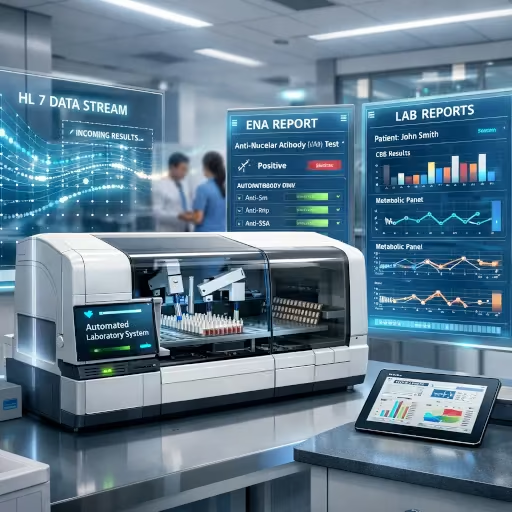
Hospital Report Automation and HL7 Lab Integration Software
Bidirectional HL7 equipment integration. Automated lab reports in seconds. Zero human transcription errors.
Frequently asked questions
Which LIMS software has the best reporting and custom dashboards?
How do LIMS platforms compare for FDA 21 CFR Part 11 compliance?
What is the top LIMS software for quality control and compliance?
Which LIMS offers the fastest onboarding and best user support?
Which cloud LIMS has the best mobile access for technicians?
What is the best LIMS software for small and medium clinical laboratories?
Is there a genuinely free LIMS software or free trial tier available?
How does bidirectional ASTM and HL7 machine interfacing eliminate human errors?
What compliance certifications are mandatory for a clinical diagnostic LIMS?
What is the real total cost of ownership difference between open-source and cloud SaaS LIMS?
What is the difference between a LIMS and an Electronic Lab Notebook (ELN)?
How does RFID specimen tube tracking work with laboratory software?
Discover more
You may also like
Hand-picked articles and pages worth your time next.
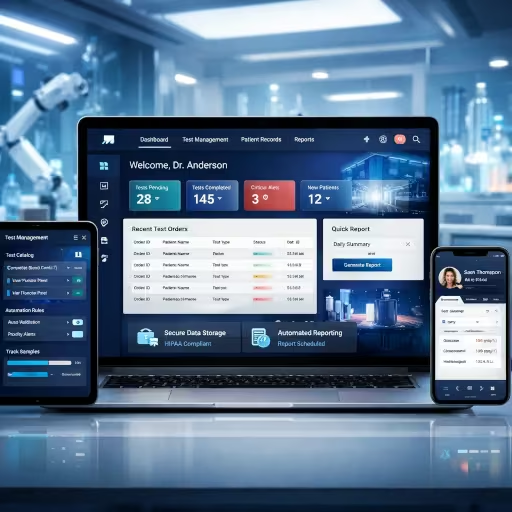
AILS (AI Laboratory System) – Cloud Clinical LIMS Platform
Cloud-based clinical LIMS with free starter tier, automated bi-directional HL7/ASTM analyzer interfacing, and instant WhatsApp PDF report delivery.
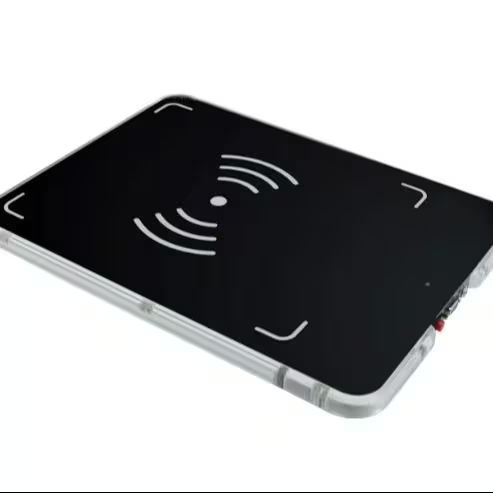
UHF Desktop RFID Specimen Tube Reader / Writer
High-speed USB desktop reader for whole-rack specimen tube tracking and instant chain-of-custody logging.