
Resource
EAS vs RFID Retail Security Guide
Compare Acousto-Magnetic (AM 58kHz), RF 8.2MHz & UHF RFID anti-theft systems. Analysis of detection range, tag costs, hard tags & retail ROI in India.

Simulate, evaluate, or request turnkey hardware & middleware deployment
-
Up to 2.4 meters
AM Gate Detection Width
wide mall entrance pedestals without false alarms
-
65–85% reduction
Retail Shoplifting Shrink
using active AM hard tags and POS deactivation
-
< 0.5 second
POS Deactivation Latency
contactless electronic pad deactivation
What is Electronic Article Surveillance (EAS) vs. RFID retail security?
Electronic Article Surveillance (EAS) is the global retail industry standard for loss prevention, shoplifting deterrence, and point-of-sale shrink control. EAS operates using specialized anti-theft pedestals (gates) installed at store exits that trigger audible and visual alarms when active security tags or soft labels pass through. While traditional EAS answers a single binary question—Is an unpurchased item leaving the store?—modern RAIN UHF RFID systems (865–867 MHz) identify the exact unique serialized product (SKU, color, size, batch). Understanding the interplay between Acousto-Magnetic (AM 58 kHz), Radio Frequency (RF 8.2 MHz), and UHF RFID enables retail loss prevention managers to deploy the optimal combination of anti-theft protection and item-level inventory accuracy across Indian shopping malls and high-street stores.
AM (58 kHz) vs. RF (8.2 MHz) vs. UHF RFID: physics and detection comparison
Retail security architectures rely on three primary frequency standards, each with distinct electromagnetic characteristics:
- Acousto-Magnetic (AM 58 kHz): AM systems use magnetostrictive amorphous metal strips. When excited by the gate pedestal's 58 kHz magnetic field, the strips resonate mechanically, emitting a distinct acoustic signal detected by the receiver. AM offers superior wide-aisle coverage (up to 2.4 meters between pedestals), exceptional immunity to false alarms from foil-lined booster bags, and reliable performance near liquid-filled cosmetics and beverages.
- Radio Frequency (RF 8.2 MHz): RF systems use planar LC tuned resonant circuits etched on adhesive paper stickers or hard tags. RF is cost-effective for supermarkets and bookshops with narrow entrances (0.9 to 1.4 meters), but suffers significant signal attenuation when near metals, foil packaging, or liquids.
- UHF RFID (865–867 MHz): UHF tags contain microchips with serialized EPC numbers. While UHF enables rapid 700+ tags/second stock counting and smart fitting rooms, using UHF alone for exit anti-theft requires tuned directional antenna arrays or overhead portals to prevent reading merchandise held near store entrances.
AM security gate systems: wide-aisle detection, foil resistance, and pedestal design
Acousto-Magnetic (AM) security gates are the preferred choice for premier Indian apparel brands, department stores, and electronics retailers. AM pedestals can protect entrance widths of up to 2.4 meters per pair in modern acrylic or sleek aluminum designs. Advanced AM gate controllers feature integrated jammer detection, metal-foil booster bag alarms (preventing professional shoplifters using foil-lined bags), and integrated customer footfall traffic counters. Acrylic transparent pedestals maintain retail store aesthetics while providing unambiguous visual LED strobe alarms during theft incidents.
EAS magnetic detacher keys: SuperLock 12,000+ Gauss vs. mechanical detachers
EAS hard tags (such as mini pencil tags, golf tags, spider wraps, and optical tags) are secured to apparel using hardened steel clutch pins. Removing these tags at the checkout counter requires an industrial EAS magnetic detacher key. High-security retail hard tags utilize SuperLock mechanisms requiring magnetic flux densities of 12,000 Gauss to 15,000 Gauss (Neodymium N52 rare-earth magnets) to release the internal ball-clutch lock. Countertop magnetic detachers must be permanently flush-mounted into the POS cashier desk and locked during non-business hours to prevent unauthorized staff detachment or customer theft.
Soft label deactivator pads: contactless high-speed POS checkout workflows
For non-reusable items such as cosmetics, boxed electronics, pharmaceuticals, and packaged apparel, stores apply disposable AM or RF soft barcode labels. At the billing counter, cashiers swipe the item across an electronic EAS Deactivator Pad embedded into the barcode scanner or flush-mounted on the counter. The deactivator emits a high-intensity magnetic pulse that permanently alters the magnetic bias of the tag strip (demagnetization) in under 0.5 seconds, deactivating the label so the customer can exit through the security gates without triggering false alarms.
Retail tagging SOP: hard pencil tags, lanyard cables, soft barcode labels, and optical tags
Consistent tag placement is critical to eliminate blind spots and customer irritation:
- Apparel & Garments: Apply mini pencil hard tags to interior fabric seams, back collar tags, or waistband hems using smooth grooved pins that do not damage delicate silk or cotton fabrics.
- Footwear & Leather Goods: Use stainless steel braided lanyard cables threaded through shoe eyelets or handbag strap rings rather than piercing the leather.
- Bottles & Canned Beverages: Apply flexible bottle collar tags or AM DR soft labels applied vertically along the curve of the glass.
- Eyewear & Optical Frames: Use specialized lightweight optical tags with rubberized claw clamps that attach to the frame temples without scratching lenses.
- Cosmetics & Boxed Items: Conceal AM soft labels inside the cardboard flap or adhere transparent RF labels over product barcodes.
Dual-tech hybrid systems: combining EAS loss prevention with RFID item tracking
Forward-thinking retail chains in India increasingly adopt Dual-Technology Hybrid Tags that combine an AM 58 kHz acousto-magnetic resonator and a RAIN UHF RFID inlay into a single compact hard tag or hangtag. This hybrid architecture delivers the best of both worlds: store staff perform high-speed inventory cycle counts in minutes using Android handheld RFID scanners (like the Chainway C72), while the existing AM gate pedestals continue to provide zero-false-alarm loss prevention at store exits.
Hardware ecosystem: pedestals, overhead detectors, detachers, and programmers
RFID Softwares provides complete turnkey EAS hardware packages designed for Indian retail environments: acrylic AM pedestals with master/slave digital signal controllers, electronic countertop deactivator pads with audible confirmation beepers, flush-mount SuperLock 12,000 Gauss magnetic detachers, and bulk supplies of AM DR soft labels and mini pencil tags. All gate electronics feature built-in power surge suppression and automatic noise tuning to eliminate false triggers from nearby neon signs, escalators, and power cables.
Indicative store setup cost and ROI breakdown in India
A standard retail store EAS deployment in India includes a pair of premium acrylic AM pedestals (₹45,000 – ₹75,000), 2 countertop POS deactivator pads (₹12,000 – ₹18,000 each), 2 SuperLock magnetic detachers (₹2,500 – ₹4,500 each), and 5,000 reusable hard tags or soft labels (₹2.20 – ₹6.50 per unit). Total initial store investment ranges from ₹75,000 to ₹1,40,000 per store entrance. With typical retail shrink in Indian apparel and electronics averaging 1.5% to 3.0% of annual turnover, an EAS anti-theft installation delivers full payback in less than 4 months by preventing merchandise shrinkage.
Retail store security deployment and anti-theft policy checklist
Successful store deployment requires operational discipline: 1) Conduct an RF noise site survey to verify clean electrical grounding and isolate pedestal cables from noisy LED power supplies; 2) Mount pedestals securely into concrete flooring using anchor bolts; 3) Train cashier teams on the mandatory Scan-Deactivate-Verify checkout sequence; 4) Maintain daily morning tag testing logs using a calibrated sample tag; 5) Implement discrete alarm escalation protocols for floor security staff to handle tag alarms professionally.
Interactive RFID Engineering Tools & Calculators
Use our free interactive calculators and simulators to model RF physics, calculate link budgets, estimate ROI, and configure EPC tags.
RFID ROI & Payback Calculator
Calculate 12-month return on investment, shrinkage reduction, and labor hours saved for your facility.
RFID Project Cost Estimator
Estimate turnkey budget breakdown including readers, antennas, tags, cloud software, and on-site engineering.
Site Survey Checklist Generator
Generate a customized engineering checklist covering RF noise floors, power drops, and portal mounting requirements.
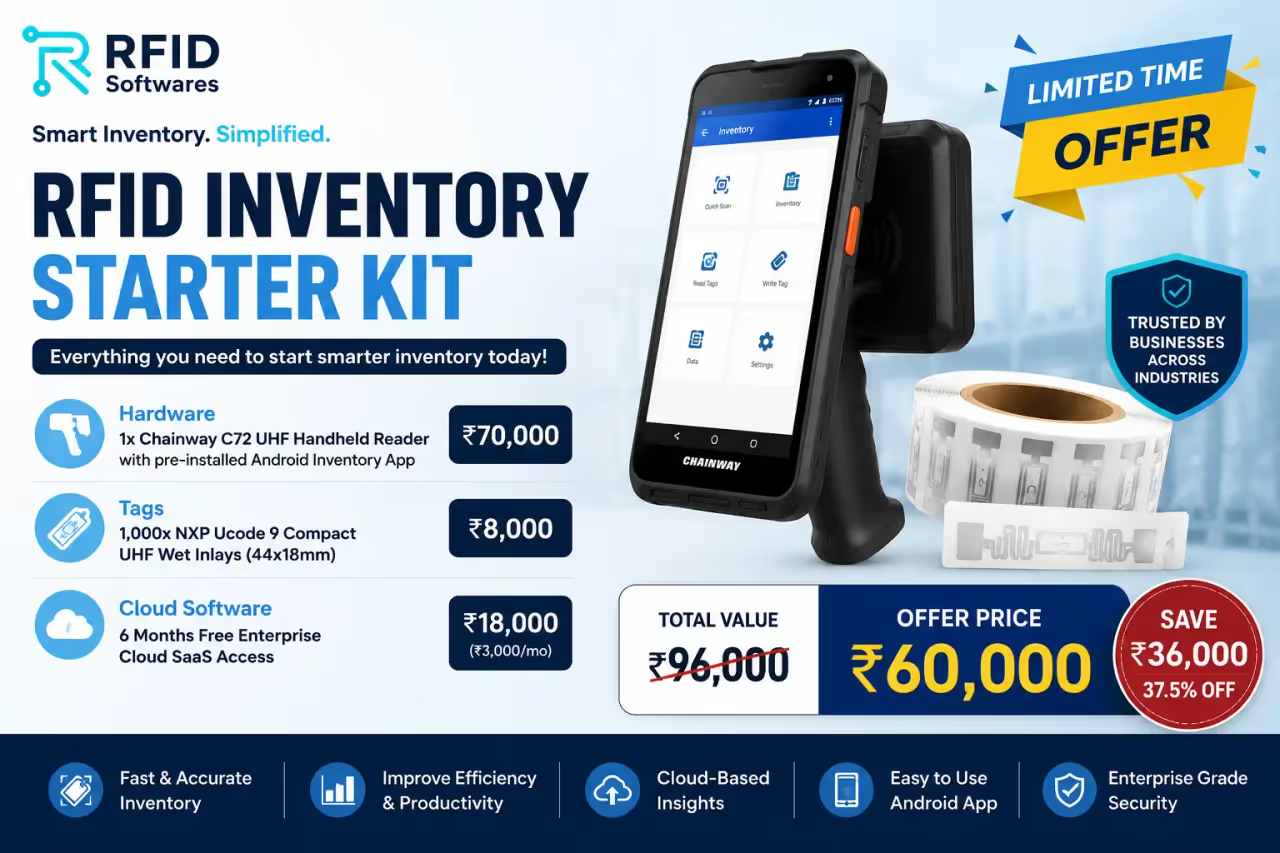
Enterprise RFID Starter Kit (POC Bundle)
Everything your warehouse, retail store, or factory needs to prove RFID feasibility. Complete with industrial hardware, certified tags, and 6 months of cloud platform access.
12–18m read range, IP65 rugged Octa-core Android terminal, 4GB/64GB, fast charger cradle. (C72 / Zebra upgrades available).
High-sensitivity EPC Gen2 inlays for cartons, totes, apparel, and asset tagging.
Real-time mobile sync, cycle counts, stock reconciliation, user roles, and CSV/Excel export.
Eliminating Inventory Shrinkage & Accelerating Store Audits?
Achieve 99.8% stock count accuracy in minutes with handheld RFID sleds and native POS/ERP inventory reconciliation.
Deployed hardware & software
Products & Hardware Deployed in This Solution
Discover the professional-grade RFID readers, tags, and custom integration software systems implemented in this deployment.
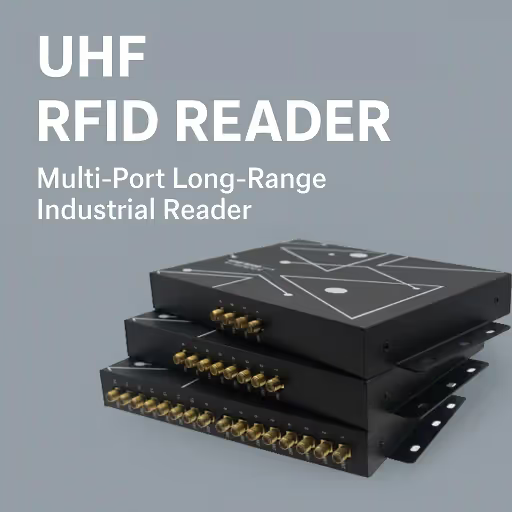
Fixed RFID Reader India and UHF 4-Port Reader Portals
Four-port readers for portals and lines
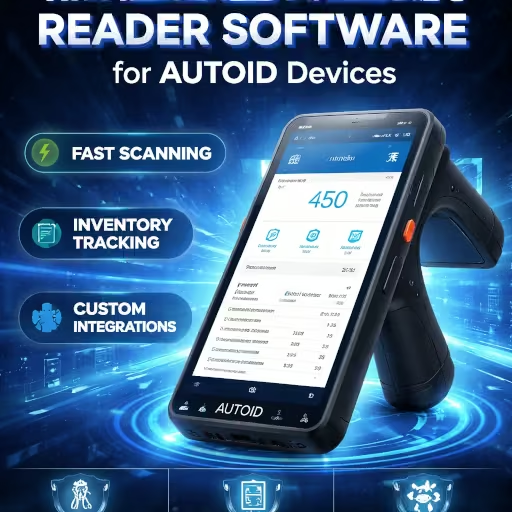
RFID Handheld Reader Software for AUTOID Mobile Terminals
Android app for seamless RFID data capture

NXP U9 Flexible Printable On-Metal RFID Label 80x40mm
1.0mm Flexible Foam On-Metal Smart Label with 6.5m Read Range for IT Assets & Metallic Surfaces
Frequently asked questions
What causes false alarms in retail AM security gates and how to prevent them?
Can shoplifters remove EAS hard tags using standard household magnets?
Can deactivated AM soft labels reactivate themselves accidentally?
Can UHF RFID overhead gates completely replace EAS pedestals?
How do dual-technology EAS + RFID hybrid tags work?
What is the lead time for EAS gate installation across retail chain stores in India?
Discover more
You may also like
Hand-picked articles and pages worth your time next.

AM RFID Gate System for Office Access Control and Security
Secure entryways with our AM based RFID gate system. Seamless RFID access control for office, retail, and library buildings. Contact for details.

RF AM Tags and Anti-Theft Security Labels for Retail
Prevent shoplifting with RF AM tags. Highly adhesive anti-theft AM labels and retail security stickers for electronics and cosmetics. Order here.

EAS Magnetic Key & Soft Label Deactivator (AM/RF)
EAS Magnetic Key & Soft Label Deactivator (AM 58kHz & RF 8.2MHz) by RFID Softwares. Fast retail anti-theft tag removal and soft label deactivation.
RFID Retail Inventory Solution: Fast Stock Audits & POS Sync
Deploy UHF RFID anti-theft security gates, ceiling readers & inventory software in India. Cut shrinkage by 68% and stock-take times from 48 hours to 18 minutes.