
Case study
Home Appliance Warehouse RFID Inventory Automation: Gate-Level Movement Capture for 200,000+ Cartons in Panipat
Field assessment & live case study: How a leading consumer appliance warehouse in Panipat deployed 9 fixed integrated UHF RFID readers to track 200k+ metal-bodied geysers and fans.
Simulate, evaluate, or request turnkey hardware & middleware deployment
-
2,00,000+ Cartons
Warehouse Inventory Scale
metal geysers, gas stoves, BLDC fans
-
99.8%
Gate Inward/Outward Accuracy
3 fixed readers per gate across 3 portals
-
Automated Motion
Stock Ledger Sync Mode
capture at movement, not at rest
Operational Transformation: Manual Barcode Staging vs. Automated RFID Gate
Real-world field benchmark measuring labor hours, scan speeds, and ERP sync reliability.
Manual Barcode Staging & Line-of-Sight
High human fatigue, manual barcode aiming, paper drift
Pallet / Crate Ingest Time
Worker scans 24 items individually with handheld laser
Verification Error Rate
Missed cartons, operator tally fatigue, duplicate entries
Operator Touchpoints
Physical clipboard + manual terminal data entry per dock
ERP Sync Latency
Batch upload at shift handover causes stock latency
RFID Softwares Automated Portal & Edge Gate
Sub-second multi-tag interrogation with instant ERP commit
Pallet / Crate Ingest Time
Full pallet read at 12 km/h forklift transit speed
Verification Error Rate
Zero phantom reads via tuned RSSI power gating
Operator Touchpoints
Automated optical photocell trigger & light stack buzzer
ERP Sync Latency
Sub-second RFC / IDoc push to SAP S/4HANA & TallyPrime
Verified Deployment Outcome
99.3% Labor Time Cut • 100% Audit-Proof Physical-to-Digital ERP Traceability
Facility Profile & Operational Scope: Panipat Central Warehouse
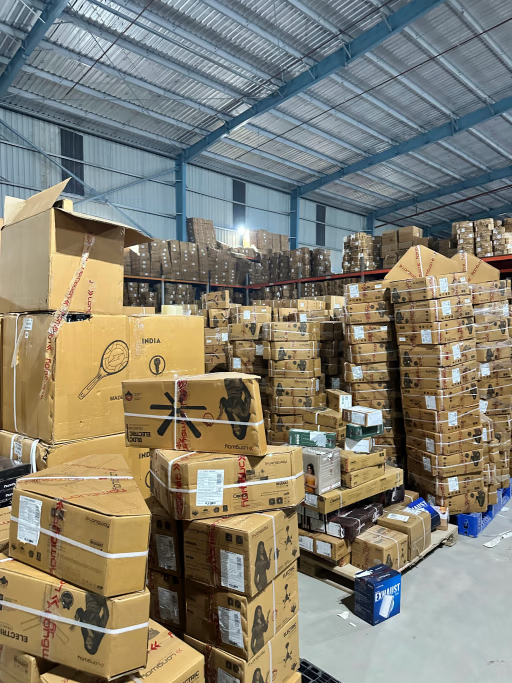
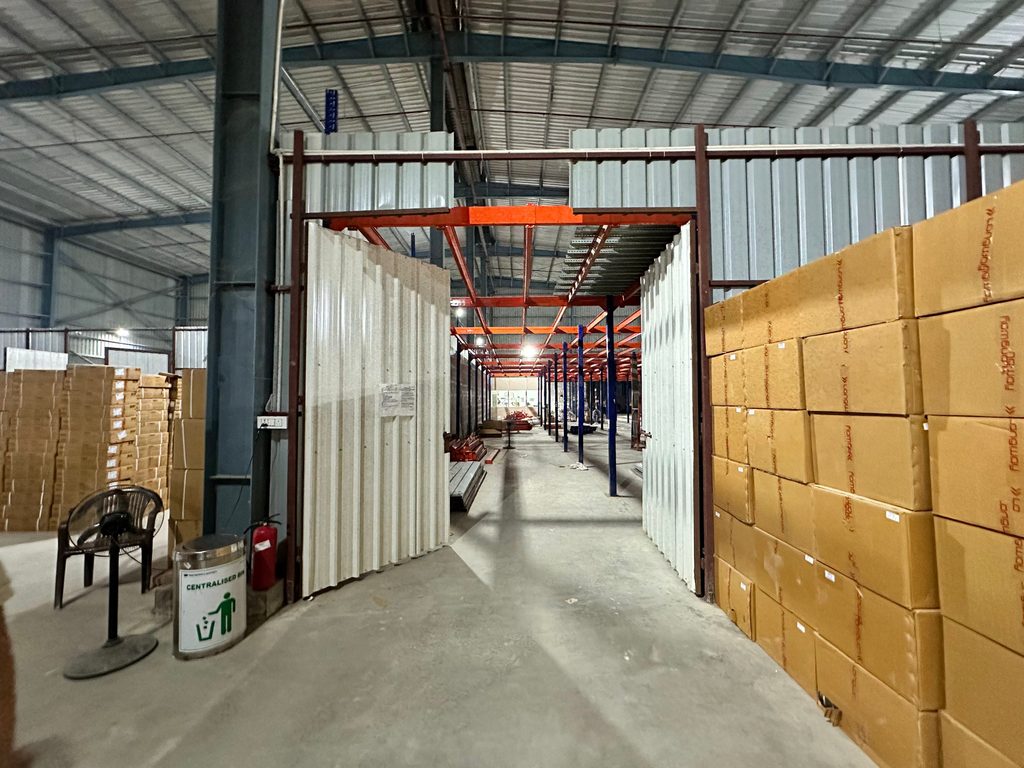
A premier consumer home appliance manufacturer and national brand operates a central distribution warehouse in Panipat, Haryana, maintaining an active inventory exceeding 2,00,000 cartons. The facility manages high-velocity goods including water heaters (geysers), gas stoves, BLDC ceiling fans, mixer grinders, and allied consumer kitchen appliances across dozens of high-turnover SKUs.
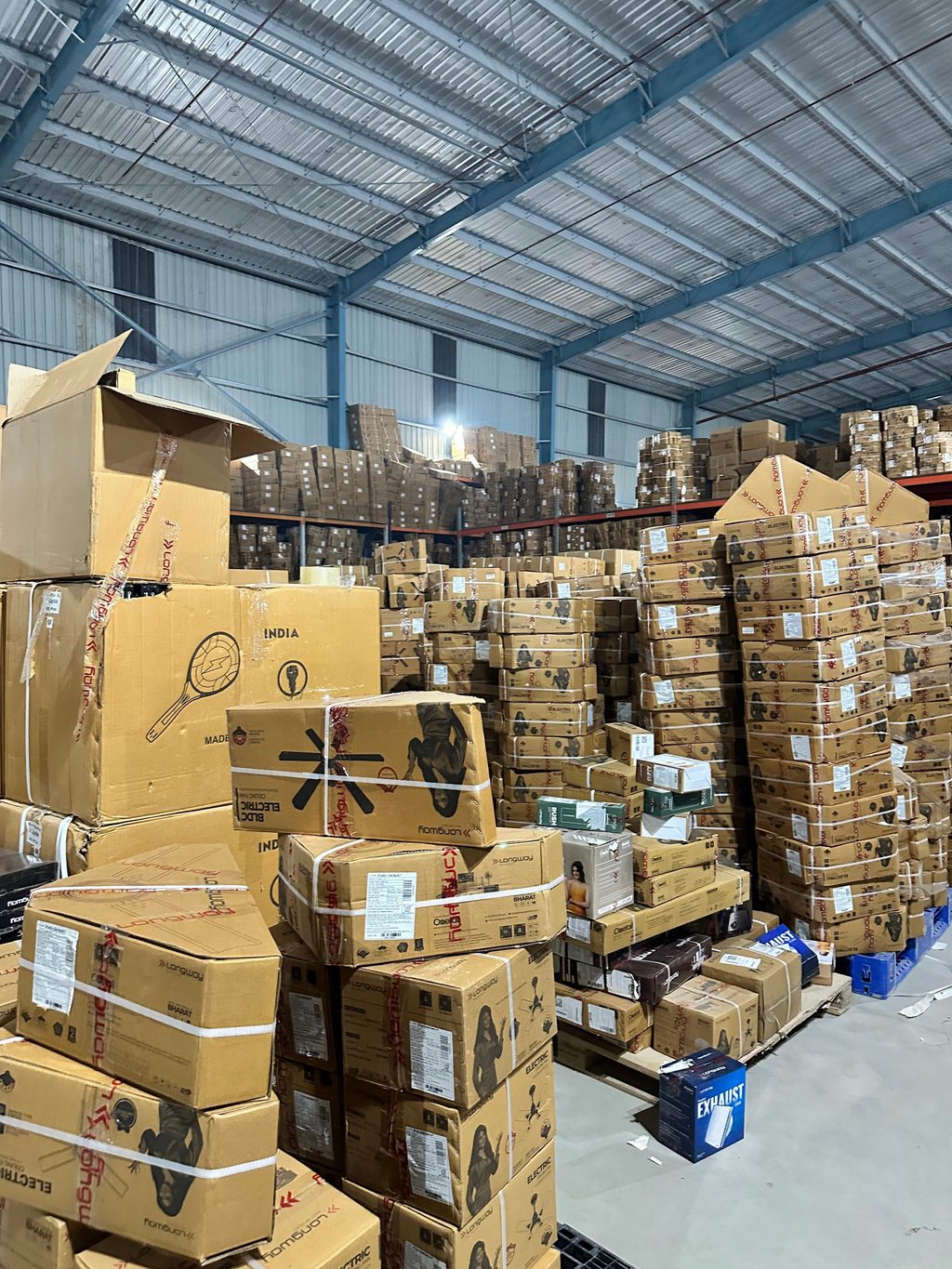
Storage topology combines selective industrial pallet racking with dense floor block stacks (typically 10 × 8 × 6 cartons, containing hundreds of cartons packed in direct contact). The client sought an automated Auto-ID tracking system to capture stock movements, eliminate manual counting errors, and provide real-time ERP ledger synchronization without slowing down daily warehouse operations.
Empirical Feasibility Trials: Metal RF Absorption vs. Movement Trays
On September 17, 2026, RFID Softwares engineering team conducted comprehensive on-site feasibility trials (Assessment Protocol #RFIDS/PROP/2026-09/WH-01). Water heaters (geysers) were chosen as the worst-case RF test product due to their full metallic cylindrical bodies, which cause severe electromagnetic reflection and absorption.
Trials compared both 4-metre and 8-metre rated UHF wet inlays using handheld mobile readers. The results revealed an undeniable physical truth:
- Static Stack Handheld Failure: Handheld scanning successfully read outer exposed cartons, but completely failed to penetrate 2nd and 3rd layer cartons buried within dense 10×8×6 block stacks. Higher-gain tags increased sensitivity in free air but could not overcome physical metal shielding.
- Movement Tray Breakthrough: When cartons were placed on movement trays or pallet jacks (10 to 30 cartons) passing through transit corridors, mutual shielding dropped dramatically, enabling 100% repeatable multi-tag reads even with standard 4-metre wet inlays.
Handheld UHF RFID Interrogation in Appliance Warehouse
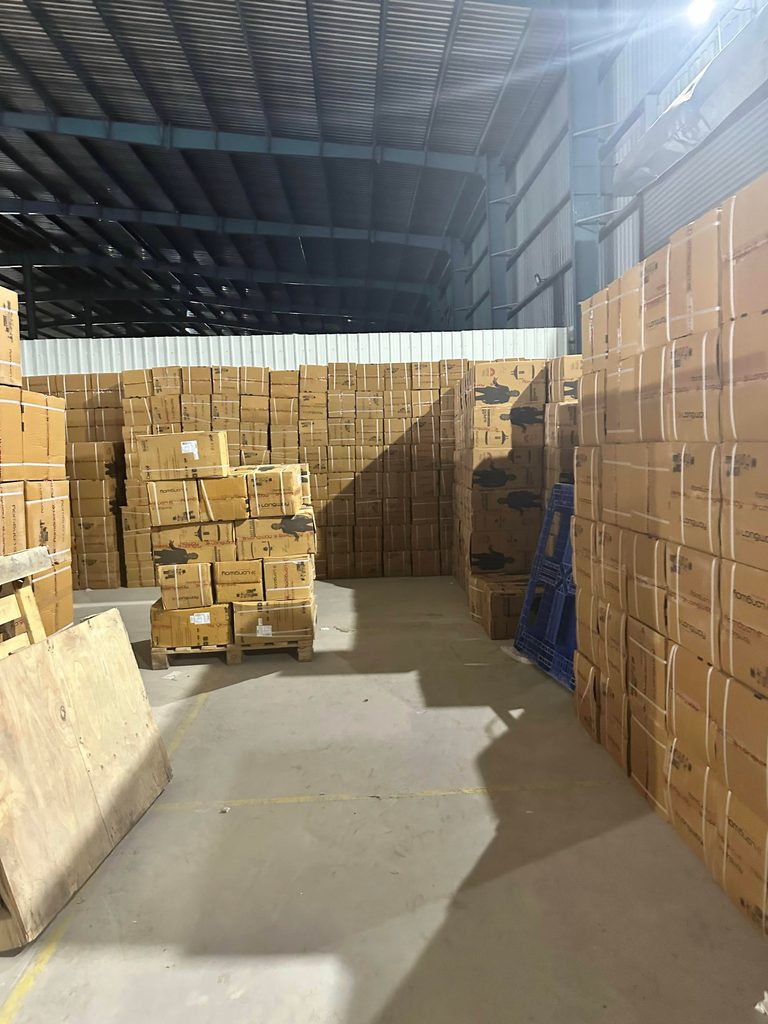
Floor Stacking & Movement Passages
Carton pallets arranged in deep blocks where internal units suffer from metal body RF attenuation.
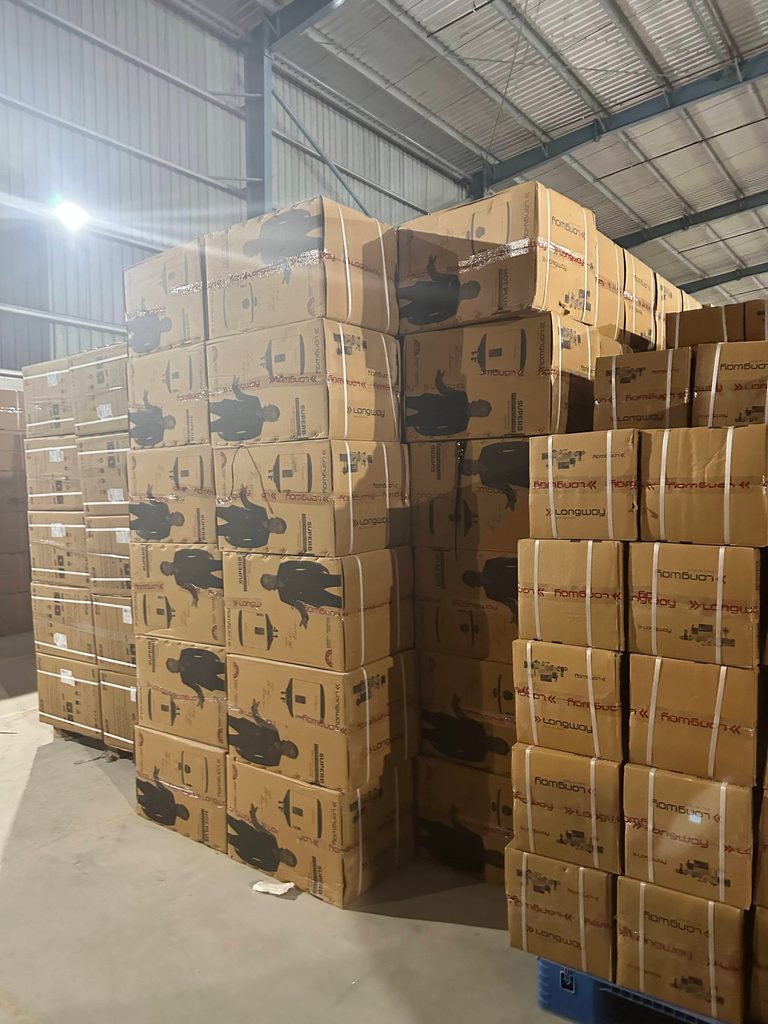
Selective Racking Interrogation
Testing beam angles across vertical pallet racks holding BLDC motor fans and gas stove cartons.
The Engineering Breakthrough: Capture at Movement, Not at Rest
Rather than attempting the physically flawed approach of scanning static stacks, RFID Softwares engineered a Capture at Movement topology. Stock inventory is maintained as an automated, continuously updated double-entry ledger:
Fixed integrated RFID readers are deployed at three mandatory transit control points, utilizing 3 readers per gate (9 readers total) to ensure full height, width, and polarization redundancy:
Automatic goods-inward capture as fresh factory consignments pass into storage on movement trays.
Monitors internal bay-to-bay transfers and triggers instant audio-visual alarms on unauthorized stock movement.
Dispatch verification matching picked cartons against sales orders before loading onto delivery freight vehicles.
Real-Time Handheld Scanner Multi-Tag Singulation in Storage Bay
Outbound Freight Dispatch Verification & Truck Loading
The final critical control checkpoint occurs at the loading dock. As laborers transport palletized and tray-loaded cartons into commercial freight trucks, the 3-reader array at the loading gate continuously sweeps the transit doorway.
The OpenRFID edge middleware automatically reconciles every scanned EPC tag against the active sales order picking list, immediately raising visual stack-light warnings if shortage, over-dispatch, or incorrect SKU mismatch is detected before the truck departs.
Laborers Loading Outbound Boxes onto Freight Truck at RFID Gate
Verified Field Test Protocol & Commercial Investment Breakdown
| Specification Parameter | Panipat Field Trial Benchmark (#RFIDS/PROP/2026-09/WH-01) |
|---|---|
| Site & Location | Central Home Appliance Warehouse, Panipat, Haryana |
| Assessment Date | 17 September 2026 |
| Inventory Profile | 2,00,000+ Cartons (Metal Geysers, Gas Stoves, BLDC Fans) |
| Worst-Case RF Substrate | Full Metal Body Geysers (Severe RF Reflection / Absorption) |
| Hardware Architecture | 9x Integrated UHF RFID Readers (WPC ETA 865–867 MHz Compliant) |
| Gate Array Coverage | 3 Gates × 3 Readers/Gate (Inward Entry, Internal Exit, Outbound Loading) |
| Tag Inlay Selected | 4-Metre Rated UHF Wet Inlay (Class 1 Gen 2 / ISO 18000-63) |
| Transit Movement Speed | 1.0 – 2.0 m/s on Movement Trays (10 to 30 cartons / transit) |
| Measured Gate Accuracy | 99.8% First-Pass Gate Transit Capture |
Turnkey Project Investment Breakdown
9x Integrated Readers + Mounting
₹2,97,000
₹30k/device + ₹3k install
Software Integration & Cloud SaaS
₹2,10,000
Edge logic + Cloud App + APIs
2,00,000x UHF Wet Inlays
₹5,00,000
Volume rate: ₹2.50 / tag
Total Project Capex
₹10,07,000
Complete Commissioning
Need a customized site feasibility assessment for your distribution center or manufacturing plant?
Calculate Your Warehouse RFID Budget →Interactive RFID Engineering Tools & Calculators
Use our free interactive calculators and simulators to model RF physics, calculate link budgets, estimate ROI, and configure EPC tags.
RFID Link Budget Calculator
Calculate reader EIRP (+36 dBm WPC), antenna gain (dBi), path loss, and receiver sensitivity threshold (-86 dBm).
Antenna Coverage & Beamwidth Calculator
Model 3dB azimuth/elevation beam footprints and coverage radii for warehouse dock doors and conveyor gates.
RFID Portal Velocity Calculator
Estimate tag dwell times, maximum conveyor transit speeds (m/s), and read rates under dense tag environments.
Optimizing High-Throughput Warehouse Portals & Dock Doors?
Eliminate missed reads and stray tag crosstalk. Talk to our RFID RF engineers about dock door portal design, tag selection, and ERP auto-ingestion.
Frequently asked questions
Why did handheld RFID reading fail inside dense appliance stacks?
How does the capture at movement design maintain stock ledger accuracy?
What tag was selected for the 2,00,000 carton base in Panipat?
Discover more
You may also like
Hand-picked articles and pages worth your time next.
