
Case study
Automotive Trolley RFID Dispatch Tracking
Case study: How an automotive plastic parts plant eliminated lost metal trollies, automated dock loading, and integrated SAP ERP with screw-mounted UHF anti-metal tags.

Simulate, evaluate, or request turnkey hardware & middleware deployment
-
0.0% Lost
Trolley Fleet Shrinkage
down from 12-15% annual loss
-
40% Faster
Dock Dispatch Speed
hands-free portal truck loading
-
100% Real-Time
Supplier Accountability
automated aging & location tracking
Industrial Manufacturing Transformation: Manual Paper Route vs. Real-Time RFID WIP
Field measurements for work-in-progress tracking, tool & die localization, and metal assembly gates.
Manual Paper Route Cards & Spreadsheets
Paper cards getting dirty/lost, manual terminal entry, misplaced dies
WIP Station Transition Check
Operator fills paper log & manual barcode scan
Tool / Die Search Time
Searching physical shop floor for custom tooling
Production Bottleneck Visibility
Management discovers line delays 8 hours late
High-Heat / Metal Read Failure
Damaged paper stickers in harsh oily wash bays
RFID Softwares On-Metal & RTLS Gateway
Tuned on-metal PCB tags & automated overhead portal antennas
WIP Station Transition Check
Conveyor portal reads on-metal tag without stopping
Tool / Die Search Time
Sub-meter zone location on shop-floor 3D tablet
Production Bottleneck Visibility
Live queue alert if station cycle exceeds threshold
High-Heat / Metal Read Failure
IP68 ceramic & PCB on-metal UHF tags withstand 200°C
Verified Deployment Outcome
Zero Unplanned Shop Floor Search Time • 100% Traceable Digital WIP History
Automotive Logistics: Dispatch Simulator & On-Metal Trolley Video
Simulate trailer loading and watch rugged on-metal UHF tags track roll cage trolleys at warehouse docks.
Automating Warehouse Trolley Inventory with UHF On-Metal RFID
High-density metal trolley and roll cage inventory tracking demo
Outbound Freight Trailer Loading
Simulates dual-dock trailer packing, conveyor feeds, and automated BOL verification.
Project Overview: Automotive Plastic Component Dispatch & The Unreturned Trolley Crisis
A leading Tier-1 automotive component manufacturer produces high-precision molded plastic components (including front/rear bumpers, dashboards, door panels, and interior console assemblies) for multiple vehicle models and assembly plants. Because these automotive parts are large and delicate, finished components are loaded into heavy-duty customized steel roll-cage trollies for transit to various downstream supplier assembly facilities.
The Operational Bottleneck: Managing this returnable transport item (RTI) fleet proved chaotic. Suppliers did not return empty trollies in sequential order—some returned empties on the same day, while others hoarded dozens of trollies for weeks before returning them in irregular batches. Plant managers suffered massive capital losses as hundreds of expensive steel trollies went missing annually. The company had zero real-time visibility into which supplier held how many trollies, where a specific trolley was last delivered, or how long it had been idling outside the plant.

Hardware Architecture: Rugged Screw-Mounted UHF Anti-Metal Tags
Because industrial transport trollies are fabricated entirely from structural steel, standard adhesive RFID labels detune and fail when placed on metal surfaces. Furthermore, industrial washdowns, mechanical vibrations during transit, and rough shop-floor handling require military-grade physical durability.
The Tagging Solution:
- Heavy-Duty IP68 Anti-Metal Hard Tags: RFID Softwares engineered and installed high-impact, UV-resistant UHF Anti-Metal RFID Tags secured permanently to the trolley steel chassis using mechanical screws and steel rivets.
- Master Asset Registration: Each tag was encoded with a unique GS1-compliant serialized EPC identifier and registered in the central asset repository, mapping the trolley’s physical serial number, tare weight, dimensions, and vehicle model compatibility.
Mechanical Tag Mounting & 360-Degree Geometry: To prevent mechanical sheer forces during forklift handling or truck transit, the UHF anti-metal hard tags were anchored to the vertical corner struts of each steel trolley using M4 tamper-proof stainless steel machine screws and vibration-dampening neoprene gaskets. The mounting height was calibrated at exactly 1.1 meters from the floor—aligning directly with the central electromagnetic beam apex of the dock door integrated reader antennas, ensuring 360-degree readability regardless of whether the trolley enters the dock frontwards, backwards, or diagonally.

Pre-Dispatch Staging: Handheld Scanners, SAP Integration & Invoicing
To streamline the dispatch workflow without complicating operator routines, the staging process was modernized using the Chainway C72 UHF RFID Handheld Reader:
- Trolley Load Assignment: When plastic components are loaded into a trolley at the end of the molding line, the staging operator sweeps the handheld reader over the trolley’s anti-metal tag.
- Destination & Order Allocation: On the rugged handheld’s Android interface, the operator selects the target customer plant or supplier and links the trolley to the active work order.
- Automated SAP ERP Sync: The software syncs with SAP ERP via REST APIs, verifying that the loaded parts match the bill of materials, automatically generating the outbound delivery invoice and printing a companion QR-coded dispatch slip.
Automated Dock Door Portals: Real-Time Truck Loading & Unloading
To track trolley movements automatically without requiring workers to stop and manually scan barcodes, RFID Softwares installed UHF Integrated RFID Readers featuring built-in 9 dBi circular polarized antennas at every factory dispatch and receiving dock door:
- Automated Outbound Truck Loading: As laborers push loaded trollies across the dock portal into delivery trucks, the integrated reader captures the anti-metal tags at speed. The system logs the departure timestamp, vehicle license plate, and destination supplier in SAP in real time.
- Automated Inbound Empty Return: When delivery trucks return with empty trollies, passing them through the receiving dock portal instantly reads the tags and updates the system—clearing the supplier of liability and marking the trolley as available for cleaning and immediate re-loading.
Fault-Tolerant Edge Middleware & SAP Integration: Our on-premise industrial edge middleware acts as the bridge between dock readers and the enterprise SAP system. In the event of temporary factory network downtime, the edge controller stores up to 250,000 tag events locally in an encrypted queue. Once connectivity resumes, it executes automatic batch synchronization via SAP BAPI/IDoc protocols, guaranteeing zero data loss during high-speed multi-truck dispatch shifts.

Live Fleet Intelligence: Supplier Liability Tracking & Overdue Aging Alerts
A centralized cloud dashboard gives operations managers complete command over the returnable asset pool:
- Real-Time Fleet Distribution: Shows total trollies in circulation, broke down into real-time buckets: In-Plant Ready, Loaded Staging, In-Transit, and On-Site at Suppliers.
- Supplier-Specific Allocation: Real-time breakdown showing exactly how many trollies are physically located at Supplier A, Supplier B, Supplier C, etc.
- Configurable Aging Alerts (> X Days): Any trolley that remains at a supplier facility beyond a configurable threshold (e.g. > 5 days without return) is flagged in high-priority red on the dashboard. The system automatically triggers automated email reminders and WhatsApp notices to the supplier’s logistics coordinator requesting prompt return of the empty containers.
Two-Tier Automated Escalation Engine: The aging engine features customizable multi-tier escalation triggers. When a trolley surpasses 5 days at a supplier location, a Tier-1 automated notification is sent directly to the vendor dispatch manager. If unreturned after 10 days, a Tier-2 executive alert is dispatched to the corporate procurement and finance heads, automatically placing a refundable container deposit block on pending purchase orders until the roll cages are returned.

Operational Results & Return on Investment (ROI)
Deploying the smart trolley RFID tracking system delivered transformative results for the automotive component manufacturer:
- Zero Trolley Shrinkage: 100% elimination of lost trollies, preventing annual capital write-offs worth tens of lakhs.
- 100% Supplier Accountability: Concrete digital timestamp records eliminated all billing and inventory disputes regarding unreturned roll cages.
- 40% Faster Dock Turnaround: Elimination of manual barcode scanning accelerated truck loading and dispatch velocity.
- Complete 4.1-Month Payback: Tangible savings from avoided trolley replacement costs and labor efficiency recouped the entire project investment in approximately 120 days.
Interactive RFID Engineering Tools & Calculators
Use our free interactive calculators and simulators to model RF physics, calculate link budgets, estimate ROI, and configure EPC tags.
RFID ROI & Payback Calculator
Calculate 12-month return on investment, shrinkage reduction, and labor hours saved for your facility.
RFID Project Cost Estimator
Estimate turnkey budget breakdown including readers, antennas, tags, cloud software, and on-site engineering.
Site Survey Checklist Generator
Generate a customized engineering checklist covering RF noise floors, power drops, and portal mounting requirements.
Deploying RFID on Metal or Extreme Temperature Production Lines?
High-heat paint shops, robotic welding cells, and engine assembly lines require specialized on-metal tags and tuned circular polarized antennas.
Deployed hardware & software
Products Used in This Case Study
Discover the professional-grade RFID readers, tags, and custom integration software systems implemented in this deployment.

UHF Anti Metal Tags for Industrial Asset Tracking Systems
Ruggedized IP68 on-metal UHF RFID tags with screw holes and high-impact ABS encapsulation for steel roll cages and trollies.
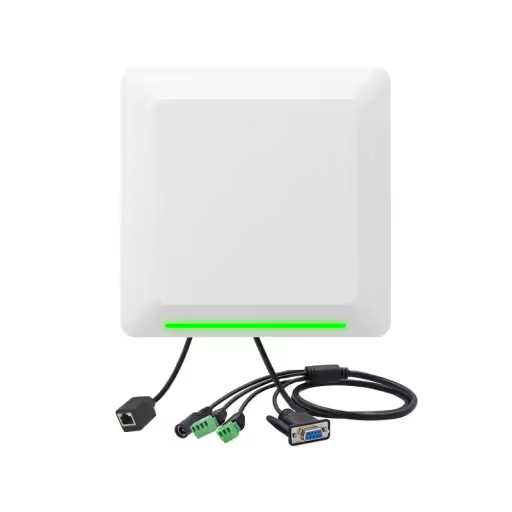
UHF Integrated RFID Reader and Long Range Parking Scanner
All-in-one industrial UHF RFID reader with built-in 9 dBi circular antenna for automated dock door loading and truck dispatch.

Chainway C72 UHF RFID Handheld Reader India | AUTOID
Rugged Android mobile computer with long-range UHF RFID pistol grip for pre-dispatch staging and SAP order allocation.