Deepak Sharma, Co-Founder at My IT Solutions (admis.co)
Verified Project
"Incredibly rugged reader. The 4-port setup allows us to monitor multiple assembly zones from a single unit."
Click thumbnails to switch media. Click main image for fullscreen.
Every hardware reader and handheld is tested for RF sensitivity, power output, and GPIO triggering at our Noida facility. Fully calibrated for India WPC 865.0–867.0 MHz with test certificate.
Fixed RFID Readers
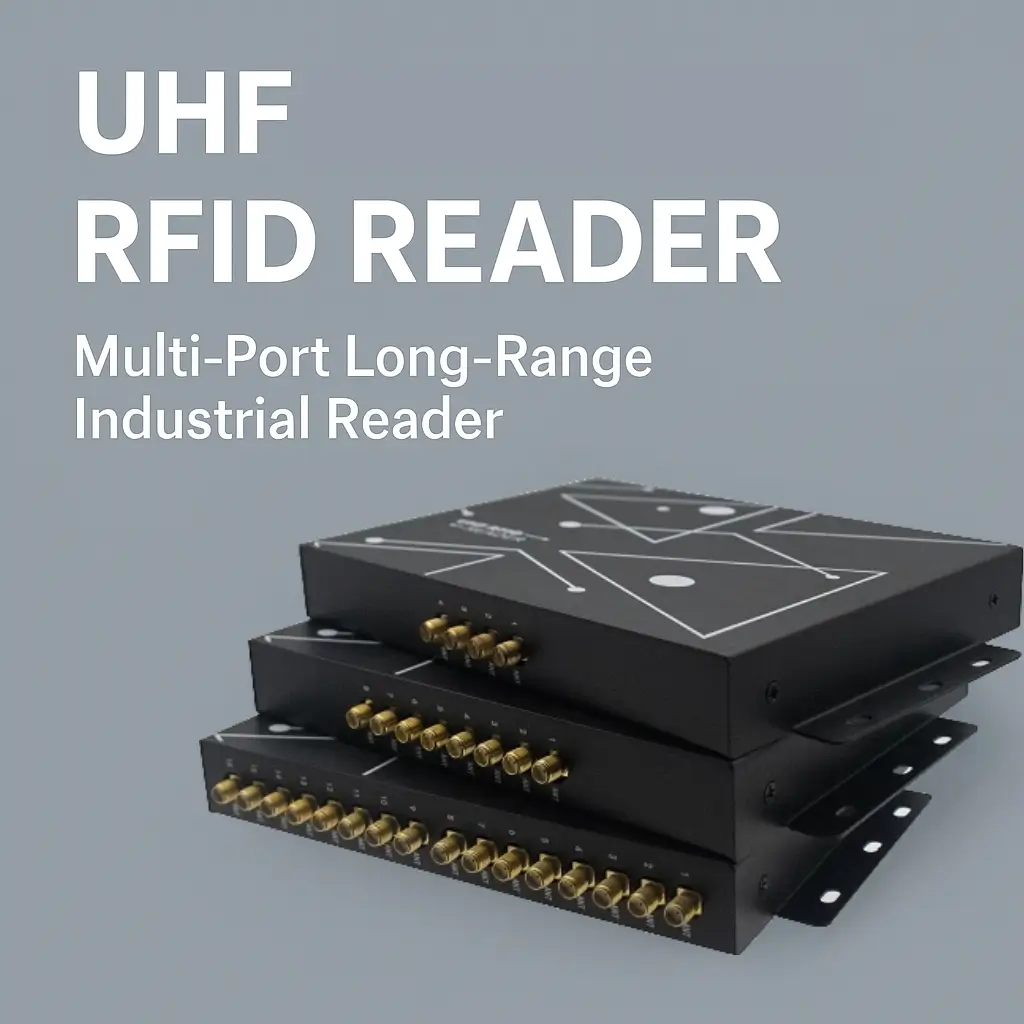
Industrial 4-Port & 8-Port Fixed UHF RFID Reader | Impinj E710 / R2000 Engine & PoE+ Gigabit Gateway
Wholesale & custom volume pricing available. Get an instant quote below.
Enterprise Assurances
Eliminate tag flooding. We engineer edge middleware daemons that filter tag reads locally and post automated Goods Receipt & Dispatch vouchers into SAP or Tally Prime.
Power your automated warehouse dock doors, production conveyor lines, and asset portals with our high-throughput Fixed RFID Readers. Available in 4-port and 8-port SMA/TNC configurations, these enterprise readers integrate genuine Impinj E710 / Indy R2000 transceiver engines to achieve lightning-fast read rates exceeding 1,000 tags per second with industry-leading -88 dBm receiver sensitivity. Housed in rugged die-cast aluminum enclosures and powered over a single Ethernet cable (PoE+ 802.3at), our readers eliminate complex external power drops while offering isolated GPIO ports to trigger light stacks, audible sirens, and conveyor diverters automatically.
The universal ultra-high frequency (UHF) passive radio backscatter standard powering global retail, logistics, and asset tracking.
The vendor-agnostic international binary protocol standard for controlling and streaming tag data from fixed UHF RFID readers.
Lightweight publish/subscribe protocol optimized for streaming real-time RFID reads from edge readers and smart lockers into enterprise cloud platforms.
Connect, configure RF power (10–33 dBm), and stream tag inventory to your ERP / backend in under 5 minutes.
using OpenRFID.Core.Drivers;
using OpenRFID.Core.Models;

// 1. Initialize TCP/LLRP Connection
using var cts = new CancellationTokenSource(TimeSpan.FromSeconds(30));
var reader = new OpenRfidClient(ip: "192.168.1.116", port: 5084);

await reader.ConnectAsync(cts.Token);
await reader.SetPowerAsync(antennaId: 1, txPowerDbm: 30.0); // India WPC 865-867 MHz

// 2. Stream Real-time RFID Inventory Events with Lock-Free Channel
await foreach (var tag in reader.StreamTagsAsync(cts.Token))
{
    Console.WriteLine("[LIVE READ] EPC: " + tag.EpcHex + " | RSSI: " + tag.RssiDbm + " dBm");

    // Dispatches directly to SAP / Tally / SQL Database queue
    await erpBridge.PushBatchAsync(tag);
}Hardware wiring specifications for connecting Fixed RFID Reader (4-Port & 8-Port UHF) for Warehouses & Portals directly to optical photocell sensors, light stacks, and Siemens / Allen-Bradley PLCs.
Instead of keeping the RFID scanner running 24/7 (which overheats equipment and reads distant tags accidentally), a physical light beam sensor (photocell) tells the reader to scan only when a box arrives on the conveyor belt. If the box has a missing or wrong tag, the reader instantly trips a red light and signals a robotic arm or pneumatic pusher to divert the box.
| Register Address | Data Type | Access | Description & PLC Interpretation |
|---|---|---|---|
| 40001 | UINT16 | Read-Only | Reader Status: 0=Idle, 1=Scanning Active, 2=Fault/Overheat |
| 40002 | UINT16 | Read-Only | Total Unique Tags Captured in Current Trigger Cycle |
| 40003–40008 | 6 x UINT16 | Read-Only | 96-bit Hex EPC Data of Primary Verified Tag |
| 40009 | INT16 | Read-Only | Peak Signal RSSI (e.g. -48 dBm) for RF coverage tuning |
| 40101 | UINT16 | Read/Write | PLC Software Trigger Override: Write 1 to start inventory cycle |
Safe operational limit with multipath mitigation & antenna detuning buffer.
Maximum line-of-sight range in ideal non-metallic open air.
Every unit is factory-inspected, serialized, and paired with essential deployment accessories.
IP53/IP65 aluminum chassis with PoE+ support
Universal AC input with surge protection
Ultra-low attenuation SMA-Male to RP-TNC Male
Vibration-damped bracket for portal masts
Plug for photocell beam sensors & light stack relays
Native SAP RFC, Tally XML & LLRP bridge
We offer paid 14-day on-site pilot trials with demo setup in Delhi-NCR (minimum ~₹50,000+ demo POC fee + refundable hardware deposit). Remote-assisted starter packs available across India.
Based on 4 verified client reviews.
"Incredibly rugged reader. The 4-port setup allows us to monitor multiple assembly zones from a single unit."
"Outstanding read rates. Successfully captures high-speed pallet tags passing through our warehouse dock doors."
"Very easy to configure via the LLRP protocol. Integrates cleanly with our local inventory database."
"Power over Ethernet (PoE+) support made installation super clean without extra power cabling."
Use our free interactive calculators and simulators to model RF physics, calculate link budgets, estimate ROI, and configure EPC tags.
Calculate reader EIRP (+36 dBm WPC), antenna gain (dBi), path loss, and receiver sensitivity threshold (-86 dBm).
Model 3dB azimuth/elevation beam footprints and coverage radii for warehouse dock doors and conveyor gates.
Estimate tag dwell times, maximum conveyor transit speeds (m/s), and read rates under dense tag environments.
Unit Price
₹52,000
Related solutions, hardware specifications, and integration guides.
product
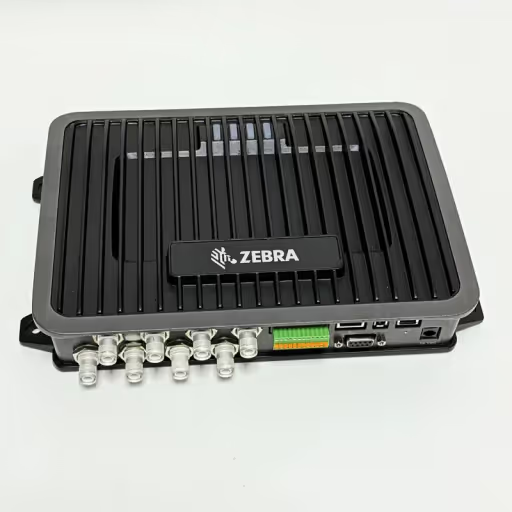
Industrial 4-port and 8-port fixed UHF RFID reader for high-throughput warehouse portals.
View →

product
Optimize waste collection with RFID Waste Management System: UHF tags (10m range), real-time GPS tracking (<5m accuracy), 30% fuel savings. Contact for demo.
View →

product
RFID library management system with KOHA integration reduces checkout to 10 seconds, real-time tracking, anti-theft security, self-service kiosks. Contact now
View →

blog
RFID Integration provides enhanced tracking and automation compared to barcodes, but at a higher cost.
View →

blog
Discover how RFID Patient Tracking Systems enhance hospital operations and patient care with advanced tracking and management features.
View →
service
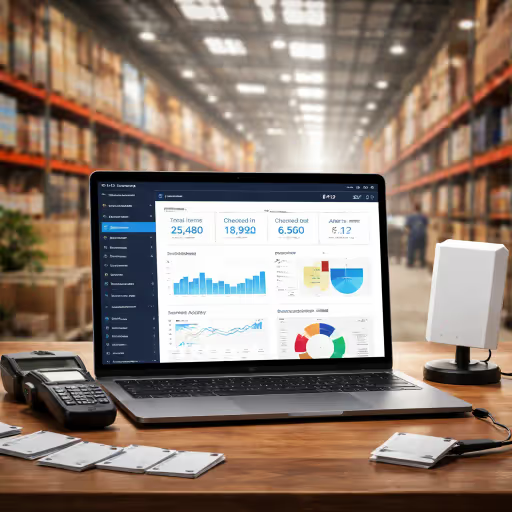
Unlock your business potential with RFID integration solutions. Achieve 99% inventory accuracy and cut costs by up to 50%. Contact us for customized quotes.
View →
middleware
Production-grade edge middleware for Impinj Speedway R420 and R700 fixed readers. Real-time tag direction sensing, phase angle reporting, and conveyor ghost-read suppression.
View →