
Resource
RFID Standards Guide India
Guide to RFID standards in India. Official WPC 865–867 MHz ETA regulations GSR 564(E), GS1 EPC Gen2v2 air-interface, ISO 18000-6C & cryptographic tag security.

-
up to 99%
Inventory accuracy (typical UHF rollout)
with tuned tags and processes
-
25–45%
Labor efficiency
vs manual cycle counts (varies by baseline)
-
hundreds/sec
Read throughput
fixed reader portals, SKU dependent
What are the essential international RFID standards and WPC regulations in India?
RFID systems are governed by a hierarchy of international telecommunication, air-interface, and data serialization standards that guarantee multi-vendor hardware interoperability and spectrum compliance:
- WPC India Spectrum Regulation (GSR 564(E)): The Ministry of Communications Wireless Planning & Coordination (WPC) wing de-licenses the 865.000 MHz to 867.000 MHz frequency band in India for Ultra-High-Frequency (UHF) RFID. Operating under Equipment Type Approval (ETA) standards via the Saral Sanchar portal, fixed and mobile readers are permitted a maximum equivalent isotropically radiated power (EIRP) of 4.0 Watts (36 dBm EIRP / 33.85 dBm ERP) with a channel carrier bandwidth of 200 kHz across 10 designated channels.
- ISO/IEC 18000-6C & EPC Gen2v2: The core global air-interface standard defining physical and logical communication between readers and passive UHF tags operating in the 860–960 MHz spectrum.
- ISO/IEC 14443 (Type A/B) & ISO/IEC 15693: International standards governing High-Frequency (HF 13.56 MHz) and Near-Field Communication (NFC) smart cards, library book identification, and patient wristbands.
- GS1 EPC Tag Data Standard (TDS 2.0): Standardized data encoding syntax translating commercial GTIN barcodes into globally unique 96-bit and 198-bit EPC identifier structures.
EPC Gen2v2 cryptographic security & anti-counterfeiting features
The EPC Gen2v2 (ISO/IEC 29167) standard introduces military-grade security extensions to passive RFID architectures to combat tag cloning and unauthorized data interception:
- Cryptographic Challenge-Response (AES-128): Tags equipped with Gen2v2 cryptographic engines (such as NXP UCODE DNA or Impinj Monza R6-P) do not transmit unencrypted static serial numbers. When interrogated by an authorized reader, the reader sends an encrypted random cryptographic challenge; the tag calculates a dynamic AES-128 MAC (Message Authentication Code) that changes on every single read cycle, rendering tag cloning impossible.
- Untraceable Command (Privacy Protection): Allows retailers to dynamically hide or scramble User Memory, TID, or EPC fields after point-of-sale checkout, preventing third-party tracking while maintaining warranty reactivation capabilities.
- Multi-Level Memory Bank Segmentation: Gen2v2 provides granular read/write access passwords across four standard memory banks (Reserved, EPC, TID, and User Memory), supporting independent cryptographic keys for supply chain partners, customs authorities, and end customers.
GS1 EPC Tag Data Standards (TDS 2.0) syntax & binary layouts
Modern enterprise WMS and ERP platforms standardize on four core GS1 EPC serialization schemes:
| GS1 Key Scheme | Target Enterprise Asset | Binary Length | Practical Business Use Case |
|---|---|---|---|
| SGTIN-96 / SGTIN-198 | Individual Item / Retail SKU | 96 or 198 bits | Apparel, electronics, and pharmaceutical unit serialization |
| SSCC-96 (Serial Shipping Container Code) | Logistics Pallet / Master Carton | 96 bits | Dock door verification of mixed-SKU logistics pallets |
| GRAI-96 (Global Returnable Asset Identifier) | RTI / Bins / Metal Stillages | 96 bits | Automotive Tier-1 returnable containers and gas cylinders |
| GIAI-96 (Global Individual Asset Identifier) | Fixed IT Assets / Machines | 96 bits | Capitalized data center servers, laptops, and hospital medical gear |
Standards compliance across reader & tag manufacturers
Enterprise compliance requires hardware certified for both WPC 865–867 MHz frequency masks and ISO/GS1 protocol suites:
| Hardware Platform | Certified Standards | Supported Memory & Security | Primary Deployment |
|---|---|---|---|
| Impinj Speedway / R700 | ISO 18000-6C, Gen2v2, LLRP 1.1, WPC India | Full EPC TDS 2.0, AES-128 challenge-response | Industrial dock portals, conveyor tunnels |
| Zebra FX9600 / FX7500 | ISO 18000-6C, EPC Gen2, WPC GSR 564(E) | SGTIN-96, SSCC-96, 512-bit User Memory | Heavy manufacturing, warehouse gates |
| Chainway C72 / C71 Handheld | ISO 18000-6C, EPC Gen2v2, BIS / WPC ETA | 96/128-bit EPC, Impinj E710/R2000 IC | Retail store inventory, field audits |
| NXP UCODE DNA / Monza R6-P Inlays | ISO 29167-10 (AES-128), ISO 18000-6C | 128-bit EPC, 3k-bit User Memory, Untraceable | Luxury anti-counterfeiting, vehicle FASTag |
Commercial investment considerations for standards-compliant deployments
Deploying standards-compliant RFID ensures your investment is future-proof and vendor-agnostic:
- Standard vs Cryptographic Gen2v2 Inlays: Standard ISO 18000-6C tags range from ₹3.50 to ₹6.50 per unit. Cryptographic AES-128 secure tags (NXP UCODE DNA) range from ₹12.00 to ₹24.00 per unit for high-security applications.
- WPC-Certified Readers: Fixed 4-port industrial readers with ETA compliance range from ₹55,000 to ₹95,000 per unit.
- GS1 Serialization Middleware: OpenRFID Middleware includes pre-built GS1 TDS 2.0 encoder/decoder libraries (SGTIN-96, SSCC-96, GRAI-96) with zero recurring per-tag royalty fees.
Step-by-step checklist for standards & WPC compliance in India
A 5-step engineering checklist to guarantee 100% regulatory and protocol compliance:
- Verify WPC ETA Certification: Ensure all imported or locally procured RFID fixed readers and handhelds carry valid Equipment Type Approval (ETA) for the 865–867 MHz band.
- Select GS1 Identifier Scheme: Determine whether your application requires SGTIN-96 (item level), SSCC-96 (pallets), or GIAI-96 (internal fixed assets).
- Configure Reader LLRP Frequency Profiles: Lock reader hopping tables to the 10 Indian channels (865.1 MHz to 866.9 MHz) and limit RF output to 30 dBm (4W EIRP with 6 dBi antenna).
- Implement Memory Bank Access Passwords: Set 32-bit Kill and Access passwords during batch printing to prevent unauthorized memory modification.
- Validate Middleware Compatibility: Test edge middleware against GS1 EPCglobal ALE (Application Level Events) and LLRP 1.1 protocol specifications.
ISO 18000-6C (UHF) vs ISO 15693 (HF) vs ISO 14443 (NFC)
Comparing major international RFID standards:
| Feature Matrix | ISO 18000-6C (RAIN UHF) | ISO 15693 (HF Vicinity) | ISO 14443 Type A/B (NFC) |
|---|---|---|---|
| Operating Frequency | 865–867 MHz (India) | 13.56 MHz | 13.56 MHz |
| Read Range | Up to 12 meters | Up to 1.0 meter | Up to 10 centimeters |
| Reading Speed | 700+ tags / second | 30 to 50 tags / second | 1 tag at a time |
| Primary Use Cases | Supply chain, logistics, retail | Libraries, ski passes, laundry | Contactless payments, transit cards |
| Smartphone Readability | Specialized reader required | NFC-enabled smartphones | All modern smartphones |
Case study snapshot: Pan-India GS1 SGTIN-96 apparel export compliance
A major garment exporter in Tirupur supplying global retail brands deployed our GS1-compliant SGTIN-96 encoding lines across 1.8 million apparel units annually. By adhering strictly to ISO 18000-6C and TDS 2.0 standards, outbound shipping cartons achieved 100% automated portal verification at European and North American distribution hubs with zero vendor compliance chargebacks.
What is RFID standards in practice?
For engineering buyers, compliance standards are the checklist that turns ISO paragraphs into testable reader and tag behaviors on your floor. When teams ask what RFID means in day-to-day operations, the answer is almost always about event design: which reads count as inventory, which reads are ignored as jitter, and how your ERP tolerates idempotent posts. Pilots should script those answers in middleware before scaling tag volumes, otherwise finance sees noise instead of signal.
How RFID improves warehouse and logistics efficiency
For warehouse and fulfillment, RFID improves efficiency because it changes where humans spend time: less line-scanning, fewer exception hunts, more time on exceptions that truly need judgment. Bulk UHF reads at choke points collapse dock processing time and shrink ASN mismatch investigations that otherwise consume supervisors each evening. Zebra and Impinj-class reader platforms simply provide dependable physics; the efficiency win is in the workflow redesign and middleware discipline that RFID Softwares ships with the hardware.
Interactive RFID Engineering Tools & Calculators
Use our free interactive calculators and simulators to model RF physics, calculate link budgets, estimate ROI, and configure EPC tags.
RFID ROI & Payback Calculator
Calculate 12-month return on investment, shrinkage reduction, and labor hours saved for your facility.
RFID Project Cost Estimator
Estimate turnkey budget breakdown including readers, antennas, tags, cloud software, and on-site engineering.
Site Survey Checklist Generator
Generate a customized engineering checklist covering RF noise floors, power drops, and portal mounting requirements.
Need a custom rfid standards guide india | wpc, gs1 & iso 18000-6c deployment?
Every environment has distinct RF absorption and ERP sync constraints. Let's review your exact workflow and design an end-to-end blueprint.
Deployed hardware & software
Products & Hardware Deployed in This Solution
Discover the professional-grade RFID readers, tags, and custom integration software systems implemented in this deployment.
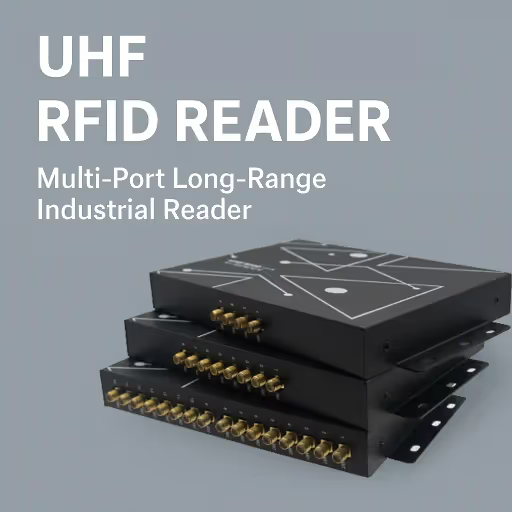
Fixed RFID Reader India and UHF 4-Port Reader Portals
Four-port readers for portals and lines
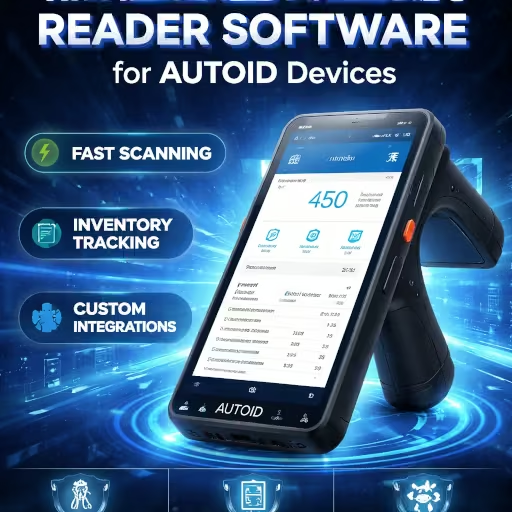
RFID Handheld Reader Software for AUTOID Mobile Terminals
Android app for seamless RFID data capture

NXP U9 Flexible Printable On-Metal RFID Label 80x40mm
1.0mm Flexible Foam On-Metal Smart Label with 6.5m Read Range for IT Assets & Metallic Surfaces
Frequently asked questions
What are the official WPC frequency limits and power restrictions for UHF RFID in India?
What is the difference between ISO/IEC 18000-6C and EPC Gen2v2?
How does GS1 SGTIN-96 encoding work on retail apparel tags?
What is the ISO 15693 standard used for in library and medical applications?
Discover more
You may also like
Hand-picked articles and pages worth your time next.
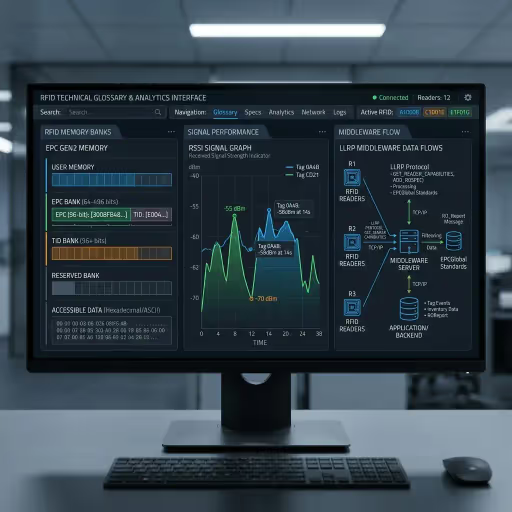
RFID Glossary & Engineering Reference Manual India
Technical RFID glossary: EPC Gen2 memory banks, RSSI, LLRP protocols, WPC 865-867 MHz & GS1 SGTIN-96 standards for Indian buyers.
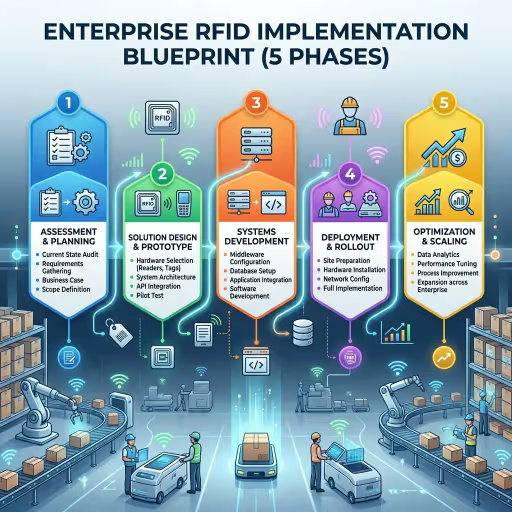
Step-by-Step RFID Implementation Guide India
Comprehensive 5-phase RFID implementation guide for India: RF site survey, tag surface selection, dock portal tuning, WMS sync & hypercare support.

RFID Middleware & SDK Integration Services
Enterprise RFID middleware and SDK integration services. LLRP socket listeners, sliding-window deduplication, and direct SAP / TallyPrime pipelines.
Fixed RFID Reader India and UHF 4-Port Reader Portals
Buy fixed RFID reader India models (865-867 MHz). High-performance 4 port UHF reader for dock doors and conveyor systems. Inquire online now.