
NFC vs. QR Code: Complete Technology, Speed & Hardware Benchmark
In the physical-to-digital landscape, retail counters, dining tables, clinics, and corporate networking require a fast, frictionless digital bridge. Should you rely on optical QR codes, or invest in NFC (Near Field Communication)? Explore the underlying physics, speed latency benchmarks, environmental wear resistance, and why leading brands deploy Dual-Mode Phygital Hardware starting at just ₹350 ($3.50) with lifetime free software.
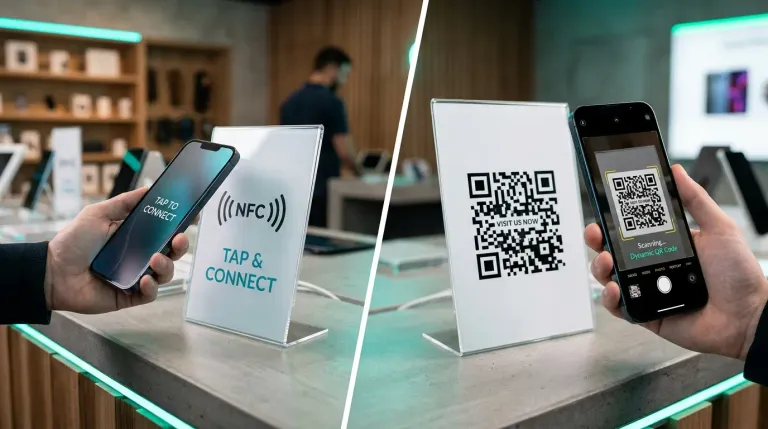
NFC 1-tap touch triggers the URL instantly without opening any camera app.
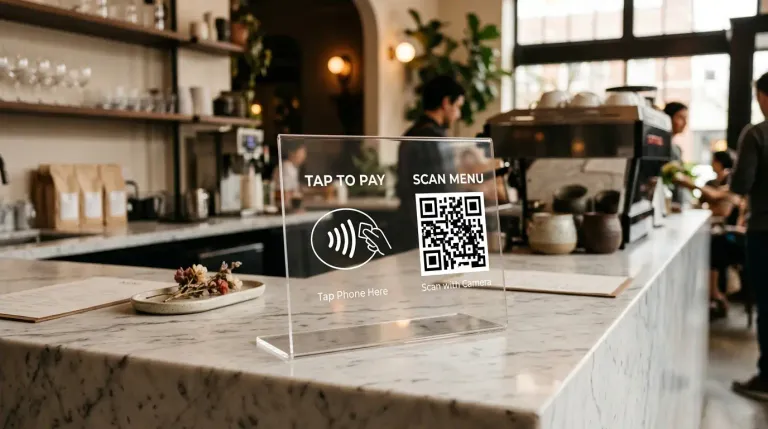
Dual-mode stands combine NFC with high-contrast QR codes for universal access.
Zero monthly software fees forever on app.rfidsoftwares.com (saving >98% vs SaaS).
⚡ Interactive Latency Race: Tap vs. Scan
Compare the multi-step friction of optical camera QR scanning against the instantaneous single-step inductive coupling of NFC:
Zero App Required: Phone touches stand → Instant 5-star Google review prompt.
Multi-Step Friction: Wake phone > Open camera > Aim lens > Autofocus > Tap screen banner.
🔬 How the Physics Differ: Inductive Coupling vs. Optical Decoding
To understand why NFC and QR codes perform differently in real retail and hospitality environments, we must examine how they transmit data into a smartphone:
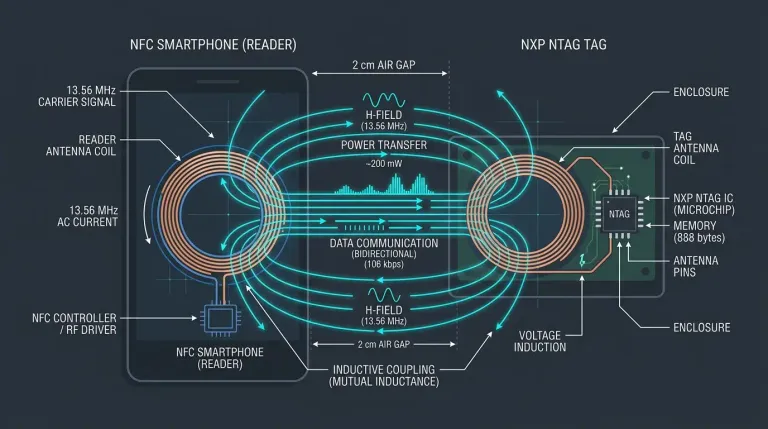
How NFC Works: 13.56 MHz Magnetic Inductive Coupling
NFC is a specialized branch of High-Frequency (HF) RFID operating strictly at 13.56 MHz, compliant with ISO/IEC 14443 Type A/B and NFC Forum Type 2 standards.
- Completely Passive: Requires no battery. Powers up via alternating magnetic field (H-field) from the phone's transmitter coil within 2 to 4 cm.
- Faraday's Induction: Induces 15 to 200 milliwatts of current through the copper antenna to power the NXP NTAG213 silicon chip.
- Instant NDEF Modulated Burst: Modulates the magnetic field, transferring the destination URL in under 30 milliseconds.
How QR Codes Work: 2D Matrix Optical Scanning
Invented in 1994 by Denso Wave, a QR code is a 2D optical barcode composed of black square modules arranged on a white grid.
- Zero Electronics: Pure visual data printed on paper, acrylic, or vinyl.
- Optical Camera Dependency: Requires active ambient lighting, manual lens focusing, and line-of-sight angular alignment.
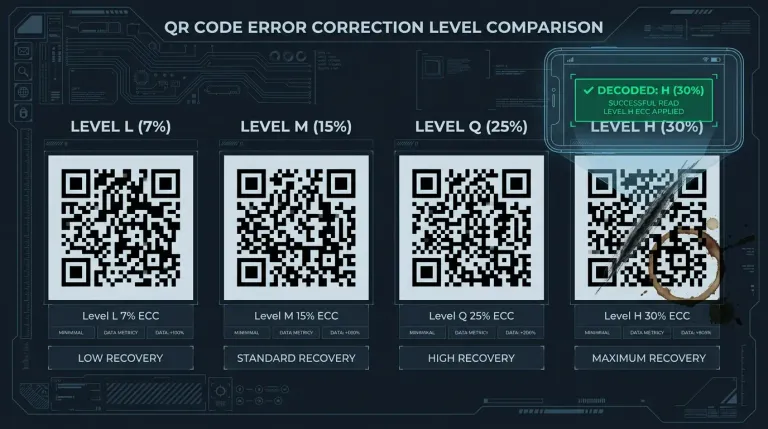
- Reed-Solomon Error Correction: Software algorithms calculate damaged modules (Levels L, M, Q, H) before decoding the alphanumeric string.
📊 Head-to-Head Benchmark: NFC vs. QR Code
| Evaluation Parameter | NFC (Near Field Communication) | QR Code (Quick Response) | Commercial Winner |
|---|---|---|---|
| User Interaction | 1-Tap Touch (Zero app required; automatic native popup) | Multi-step: Wake phone > Open camera > Aim lens > Autofocus > Tap link | NFC (3x Faster) |
| Speed to Digital URL | < 50 milliseconds | 2,500 – 6,000 milliseconds | NFC |
| Line-of-Sight Requirement | None. Operates through solid acrylic, wood, glass, or leather. | Strict Line-of-Sight. Code must be unobstructed and illuminated. | NFC |
| Physical Wear & Grease | Immune. Silicon chip sealed inside 3mm cast acrylic. | Vulnerable. Scratches, grease, and food spills corrupt scanning. | NFC |
| Device Compatibility | 98%+ modern smartphones (iPhone XR+ and all NFC Androids). | 100% of all smartphones equipped with a working camera. | QR Code |
| Security & Anti-Quishing | High. Sealed chips cannot be physically swapped or overwritten. | Zero. Vulnerable to fraudulent sticker overlays (Quishing). | NFC |
⚠️ Where QR Codes Struggle in Real-World Operations
While QR codes are cheap to print on paper, deploying them across busy restaurant tables and checkout counters exposes severe friction:
1. Grease, Spills & Scratch Damage
Paper and vinyl stickers degrade rapidly under daily cleaning chemicals and grease. Once modules are corrupted past Reed-Solomon thresholds, codes fail completely.
2. Low Ambient Lighting & Shadowing
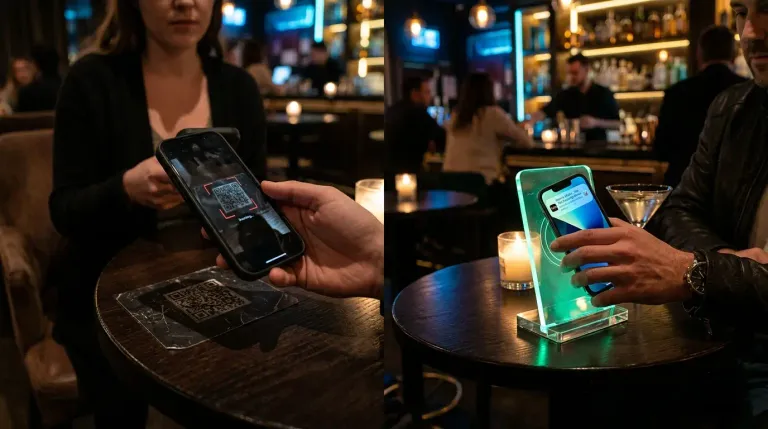
In dimly lit dining rooms or cocktail lounges, smartphone cameras struggle with contrast. Leaning over the table casts a shadow directly over the printed code.
Dual-Mode Phygital Redundancy (NFC + Dynamic QR)
Why force your business to choose between NFC speed and QR universal accessibility? RFID Softwares manufactures precision 3mm Optical Cast Acrylic Stands embedding both an NXP NTAG silicon chip and a high-contrast dynamic QR code for just ₹350 ($3.50) with 100% Lifetime Free Software.
Frequently Asked Questions (NFC vs. QR Code)
Clear engineering and operational answers for retail, hospitality, and corporate deployments.
Does an iPhone user need to open an app to tap an NFC stand or smart card? ▼
No. Every Apple iPhone from the iPhone XR, XS, and iPhone 11 through the latest iPhone 16 series features native Background Tag Reading. When an iPhone is unlocked and brought within 2 to 4 cm of an NFC tag, iOS automatically reads the NDEF record and displays an instant system banner at the top of the screen without requiring any app to be opened.
What happens if a customer has an older phone or NFC switched off? ▼
While NFC is enabled by default on 98% of modern smartphones, users with older devices or disabled NFC can simply point their standard camera at the printed dynamic QR code. Deploying a Dual-Mode Phygital Stand gives businesses 100% device compatibility across all patrons.
Which technology is more durable in restaurants and retail counters? ▼
NFC is significantly more durable. The NXP silicon chip and antenna coil can be hermetically encapsulated inside 3mm cast acrylic or waterproof resin (IP68 rated), making it completely immune to surface scratches, grease, alcohol sanitizers, and food spills. In contrast, paper or vinyl QR stickers degrade quickly and stop scanning once surface damage exceeds the error correction threshold.
What is the cost difference between NFC and QR code deployments? ▼
Pure paper QR codes are cheaper upfront (₹0.10 to ₹0.50 to print on paper). However, paper table tents tear, fade, and must be reprinted every few months. An RFID Softwares 3mm optical cast acrylic dual-mode NFC and dynamic QR stand costs just ₹350 ($3.50) with 100% Lifetime Free Software included (₹0 monthly subscription fees), lasting 5+ years without replacement.
Can dynamic QR codes and NFC tags be reprogrammed after printing? ▼
Yes! Both the NFC chip and the dynamic QR code route through your cloud gateway on app.rfidsoftwares.com. You can change your Google review URL, dining menu dishes, prices, WhatsApp contact, or social links anytime in seconds without reprinting the stand or card.
📚 Continue Reading: In-Depth Technical Guides
Dynamic vs. Static QR Codes & The 14-Day Trap
HTTP 302 redirects, edge analytics, and zero-paywall cloud software.
Smart CardsNFC vs. QR Digital Business Cards & TCO
₹30/card, 100 autonomous employee profiles, and ferrite shielding.
Enterprise MatrixRFID vs. NFC vs. QR vs. Barcode AIDC Benchmark
700 tags/sec throughput, dock door portals, and SAP/Tally sync.