
Resource
RFID FAQs & Decision Blueprint India
Enterprise RFID FAQs covering WPC 865-867 MHz spectrum laws, tag physics, Zebra & Impinj hardware, cost breakdown & ROI benchmarks in India.

-
up to 99%
Inventory accuracy (typical UHF rollout)
with tuned tags and processes
-
25–45%
Labor efficiency
vs manual cycle counts (varies by baseline)
-
hundreds/sec
Read throughput
fixed reader portals, SKU dependent
What are the core RFID frequently asked questions for Indian enterprises?
This comprehensive guide to RFID frequently asked questions provides direct technical answers to critical procurement, regulatory, and deployment questions across India. Key topics cover Ministry of Communications WPC frequency de-licensing (865–867 MHz under notification GSR 564(E)), reader portal antenna geometry, on-metal tag physics, and proven ROI benchmarks—such as how Decathlon achieves 99.2% stock accuracy, how Mata Vaishno Devi Yatra tracks millions of pilgrims using 28 km track access cards, and how NHS Plymouth saves 2,000+ clinical hours annually.
How do enterprise RFID systems function in production?
Enterprise RFID deployments operate through an integrated 3-layer architecture: Tag Layer (passive RAIN UHF or 13.56 MHz HF tags), Reader/Antenna Layer (fixed 4-port readers or handheld sleds like Chainway C72 / Zebra TC26), and Middleware/Software Layer. Readers energize passive tags via RF field induction, receiving backscattered EPC data. Middleware deduplicates high-speed read events (up to 300 tags/sec), applies RSSI signal threshold filtering to avoid false reads from adjacent aisles, and posts clean transactions into SAP, Tally, or custom WMS databases.
Benefits for Indian operations
Clear FAQ resources resolve RF surprises: spectrum, tag physics, and middleware ownership are settled before capex hits the ledger. Teams that measure before and after typically cite fewer mis-picks, shorter cycle-count windows, and clean month-end samples—often landing in the high nineties for inventory accuracy when processes, not only hardware, are tuned. Labor efficiency gains of roughly twenty-five to forty-five percent show up when operators stop line-scanning barcodes on fast movers and instead sweep zones with validated RFID paths—exact uplift depends on SKU complexity and discipline. GST-era audits and inter-branch transfers benefit when each movement has a timestamped RFID trail that reconciles to invoices without manual re-keying.
India-specific use cases
Typical RFID scenarios in India include monsoon humidity affecting adhesives, dust in northern plains DCs, and ERP batches that tolerate only idempotent RFID posts. On the ground, RFID rollouts layer in humid monsoon seasons that affect label adhesives, dust in northern plains warehouses, and integration with local ERP habits (batch postings, tolerance rules, and offline store sync). Retail backrooms in metros, pharma cold-chain handoffs, and automotive spare parts hubs each demand different tag families and reader densities; copy-paste layouts from other countries usually fail RF validation here. RFID Softwares documents SOPs in English and Hindi where teams need them, and we align exception codes with how your supervisors already think about shrink and adjustments.
Hardware integration (Zebra, Impinj, UHF RFID)
Hardware is deliberately multi-vendor: Zebra fixed and handheld readers, Impinj RAIN reader ecosystems, and complementary antennas are common anchors because spare availability and SDK maturity matter for Indian SLAs. We specify circular versus linear polarization, cable loss budgets, and mounting hardware for dock portals, tunnel readers, or aisle choke points—then tune LLRP power floors so neighboring lanes do not cross-read. On-metal and liquid-rich SKUs may need specialized tags; HF/NFC at 13.56 MHz still wins for short-range identity in some library, badge, or kiosk flows. Printers that encode-and-verify EPCs at the edge reduce bad tags entering the supply chain, especially important for garment and jewelry programs where returns are costly.
Pricing overview (indicative)
Budget planning should separate recurring tag spend from depreciable reader capex and from software seats that scale by site or transaction volume. Indicative budgets split into tags (recurring volume), readers and antennas (capex with depreciation), middleware and software (annual or per-site), plus integration services sized in person-days—not generic per-device guesses. Use the RFID solution estimator under Resources for a non-binding range; formal quotes follow a BOM review, site survey, and clarification on ERP adapters. Taxes, freight, AMC, and training are line-itemed separately so procurement committees see where flexibility exists without compromising read reliability.
How to resolve RFID questions step-by-step?
A practical implementation plan for RFID starts with a narrow pilot charter: define success metrics (accuracy, cycle-count hours, mis-ship rate) and pick one lane or SKU family that represents real RF constraints. Next, lock tag selection (on-metal vs paper, adhesive behavior, print/encode discipline) and do a site RF survey to set antenna geometry and power floors that avoid cross-reads. Then, configure middleware rules: de-duplication windows, read confidence thresholds, and idempotent ERP/WMS posting so retries don’t create duplicate movements. Finally, train operators on exceptions and run a phased go-live with hypercare, so the workflow stabilizes before expanding tag volumes across additional sites in India.
RFID vs barcode: which is better?
RFID and barcode are often complementary. Barcode is cost-effective when you can enforce line-of-sight scanning and item volumes are manageable. UHF RFID becomes compelling when you need faster throughput, bulk visibility, or reduced manual scanning—especially at dock doors, high-velocity picking, and store replenishment cycles. A good decision test is operational: if humans routinely skip scans or scan errors remain high, RFID’s automated reads and audit trail can materially reduce exceptions in Indian operations.
Case study snapshot
Representative installations start small, publish exceptions per thousand reads, and expand tagging only after middleware rules survive peak traffic. A representative deployment pattern starts with one high-value lane or SKU family, proves read stability and middleware rules, then expands tagging rates while keeping WMS posting latency within agreed SLAs. RFID Softwares keeps an executive-friendly readout—exceptions per thousand reads, recount hours avoided, and dock turnaround—so expansion decisions are evidence-led rather than faith-led.
What is RFID frequently asked questions in practice?
Practically, FAQ resources are less about hype slides and more about who owns middleware, tag selection on metals, and India spectrum assumptions. When teams ask what RFID means in day-to-day operations, the answer is almost always about event design: which reads count as inventory, which reads are ignored as jitter, and how your ERP tolerates idempotent posts. Pilots should script those answers in middleware before scaling tag volumes, otherwise finance sees noise instead of signal.
How RFID improves warehouse and logistics efficiency
For warehouse and fulfillment, RFID improves efficiency because it changes where humans spend time: less line-scanning, fewer exception hunts, more time on exceptions that truly need judgment. Bulk UHF reads at choke points collapse dock processing time and shrink ASN mismatch investigations that otherwise consume supervisors each evening. Zebra and Impinj-class reader platforms simply provide dependable physics; the efficiency win is in the workflow redesign and middleware discipline that RFID Softwares ships with the hardware.
Interactive RFID Engineering Tools & Calculators
Use our free interactive calculators and simulators to model RF physics, calculate link budgets, estimate ROI, and configure EPC tags.
RFID ROI & Payback Calculator
Calculate 12-month return on investment, shrinkage reduction, and labor hours saved for your facility.
RFID Project Cost Estimator
Estimate turnkey budget breakdown including readers, antennas, tags, cloud software, and on-site engineering.
Site Survey Checklist Generator
Generate a customized engineering checklist covering RF noise floors, power drops, and portal mounting requirements.
Need a custom rfid faqs & decision blueprint india | cost & roi deployment?
Every environment has distinct RF absorption and ERP sync constraints. Let's review your exact workflow and design an end-to-end blueprint.
Deployed hardware & software
Products & Hardware Deployed in This Solution
Discover the professional-grade RFID readers, tags, and custom integration software systems implemented in this deployment.
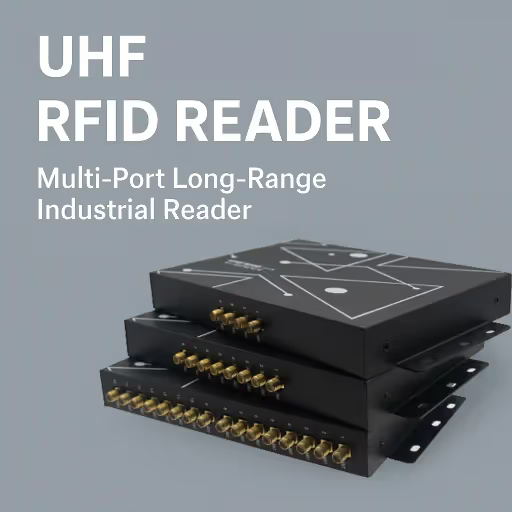
Fixed RFID Reader India and UHF 4-Port Reader Portals
Four-port readers for portals and lines

RFID Handheld Reader Software for AUTOID Mobile Terminals
Android app for seamless RFID data capture

NXP U9 Flexible Printable On-Metal RFID Label 80x40mm
1.0mm Flexible Foam On-Metal Smart Label with 6.5m Read Range for IT Assets & Metallic Surfaces
Frequently asked questions
What is RFID?
What is an RFID system?
How does RFID FAQs work?
How much does RFID cost in India?
RFID vs barcode: which is better?
How do Zebra and Impinj fit into an RFID deployment?
UHF vs HF RFID: what’s the difference?
RFID vs QR code: when should you choose RFID?
Barcode vs RFID inventory system: what changes operationally?
Which is better: RFID or barcode for Indian operations?
Is RFID better than barcode?
Where is RFID used in India today?
Which industries use RFID most?
How do I choose the best RFID software company in India?
Who provides RFID services in Delhi NCR (Delhi / Gurgaon)?
How do I evaluate top RFID vendors in India?
Discover more
You may also like
Hand-picked articles and pages worth your time next.
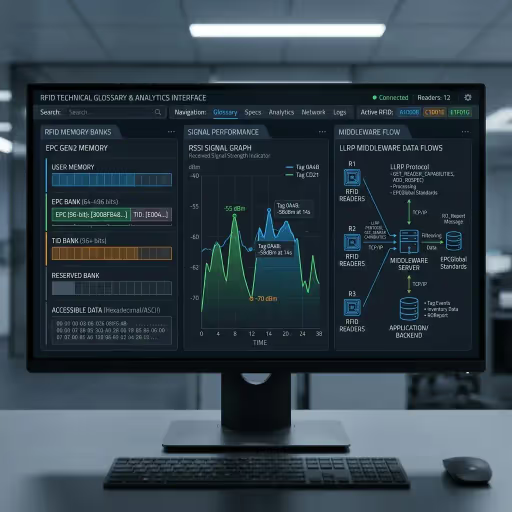
RFID Glossary & Engineering Reference Manual India
Technical RFID glossary: EPC Gen2 memory banks, RSSI, LLRP protocols, WPC 865-867 MHz & GS1 SGTIN-96 standards for Indian buyers.
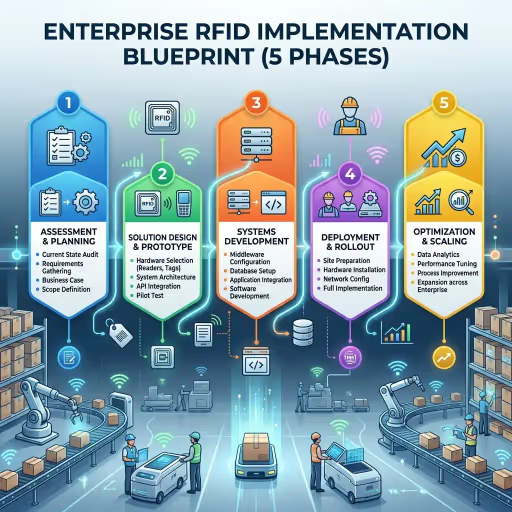
Step-by-Step RFID Implementation Guide India
Comprehensive 5-phase RFID implementation guide for India: RF site survey, tag surface selection, dock portal tuning, WMS sync & hypercare support.

RFID Standards Guide India | WPC, GS1 & ISO 18000-6C
Guide to RFID standards in India. Official WPC 865–867 MHz ETA regulations GSR 564(E), GS1 EPC Gen2v2 air-interface, ISO 18000-6C & cryptographic tag security.

RFID Cost & TCO Guide: Capex, Opex & Hardware Pricing (2026)
Complete RFID cost breakdown: tag price scaling ($0.04–$0.15), fixed dock portals vs handheld readers, middleware licensing, and 3-year TCO budgeting.