
Healthcare Integration
Healthcare Equipment Integration: Automated Hematology Analyzer Horiba h500 using ASTM
Complete integration solution for Horiba Yumizen H500 hematology analyzer with LIS using ASTM-CI protocol
- Hematology Analyzer
- ASTM Protocol
- Laboratory Integration
- Clinical Automation
- Horiba h500

The Horiba Yumizen H500 hematology analyzer integration provides seamless communication with Laboratory Information Systems (LIS) using the ASTM-CI (ASTM Common Implementation) protocol. This comprehensive solution enables automated data transmission, result processing, and report generation for clinical laboratory operations.
ASTM-CI Protocol Implementation
The Yumizen H500 communicates with the LIS using ASTM-CI (ASTM Common Implementation) protocol, ensuring standardized data exchange between clinical instruments and computer systems. The implementation follows ASTM specifications LIS01-A2 and LIS2-A2, which define the low-level protocol for transferring messages and information between clinical laboratory instruments and computer systems. This standardized approach ensures compatibility across different laboratory environments and facilitates seamless integration with existing LIS infrastructure.
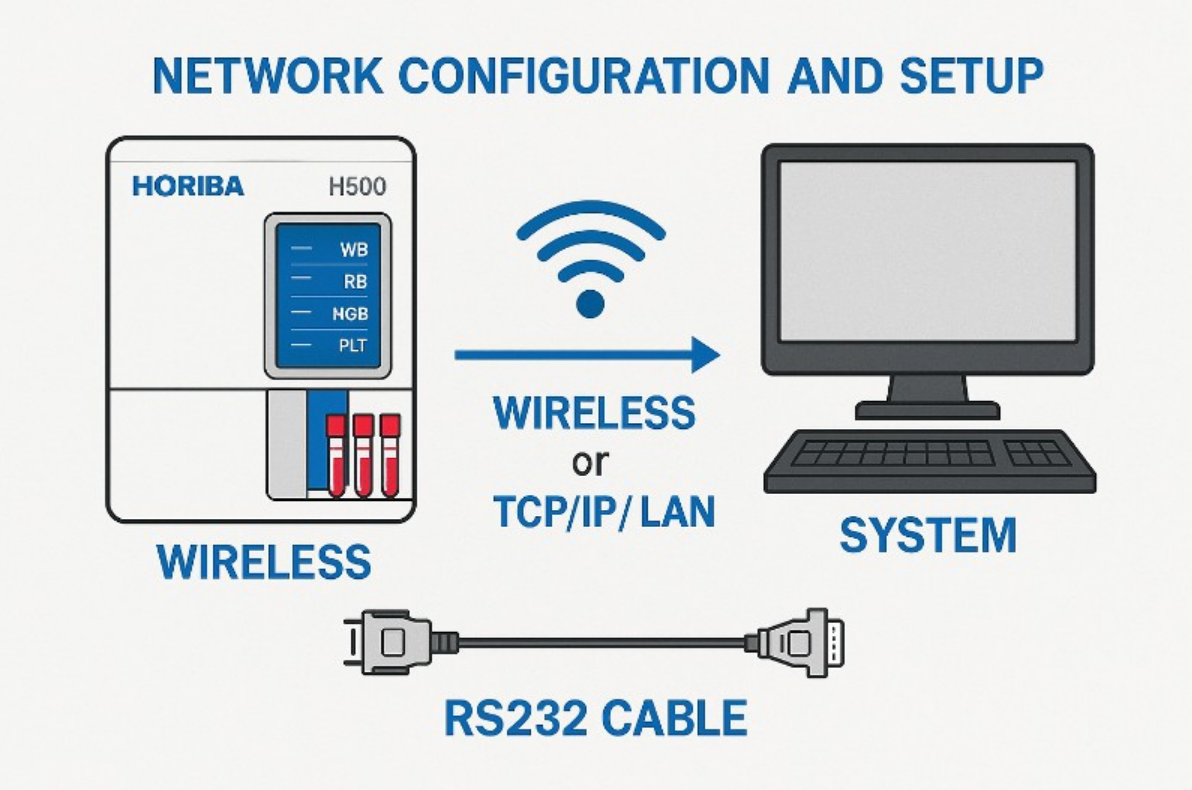
Network Configuration and Setup
The network connection, as inferred from the available information, predominantly relies on the TCP/IP protocol suite operating over a local area network (LAN), typically implemented using Ethernet. This is evidenced by the focus on details related to Ethernet connectivity, such as the RJ45 connector, which is a standard for Ethernet connections. Furthermore, the description highlights the use of Windows Socket standards, which are commonly associated with TCP/IP-based network communication within the Windows operating system. The text also mentions the configuration of IP addresses, further reinforcing the TCP/IP / LAN emphasis. While the RS232 serial communication standard is not explicitly ruled out, its applicability appears to be contingent upon the specific HORIBA Medical instrument model and the configurable options it offers. In other words, RS232 *could* potentially be utilized, but its availability is not guaranteed and would depend on specific hardware and software configurations. The major and most clearly supported connection method, as indicated by the repeated references to Ethernet, Windows Sockets, and IP addressing, is unequivocally TCP/IP operating over a LAN, specifically an Ethernet network. Therefore, the evidence strongly suggests that TCP/IP over LAN is likely preferred, communication option.
ASTM Record Structure for Result Transmission
The system implements a hierarchical record structure for result transmission following ASTM standards: Header (H) records initiate the transmission, Patient (P) records contain demographic information, optional Patient Comments (C) provide additional context, Order (O) records define test requests, optional Order Comments (C) and Traceability (M) records enhance data integrity, Result (R) records contain actual test results, Request information (Q) records provide test-specific details, and Terminator (L) records conclude the transmission. This structured approach ensures complete and accurate data transfer.

Data Processing and Report Generation
Our integration solution fetches data directly from the Horiba H500 analyzer and automatically processes it to create comprehensive clinical reports. The system parses ASTM-formatted data streams, validates result integrity, and transforms raw instrument data into structured clinical reports. Automated quality control checks ensure result accuracy and flag any anomalies for manual review. The system generates standardized reports that include patient demographics, test results, reference ranges, and clinical interpretations.
Quality Assurance and Validation
The integration includes comprehensive quality assurance measures to ensure data accuracy and system reliability. Built-in validation checks verify ASTM message integrity and data completeness. The system maintains audit trails of all data transmissions and processing activities. Quality control samples are processed alongside patient samples to verify system performance. Continuous monitoring alerts staff to any communication issues or data anomalies, ensuring uninterrupted laboratory operations.
Reader Comments
Be the first to share your thoughts.